
Got The Blues
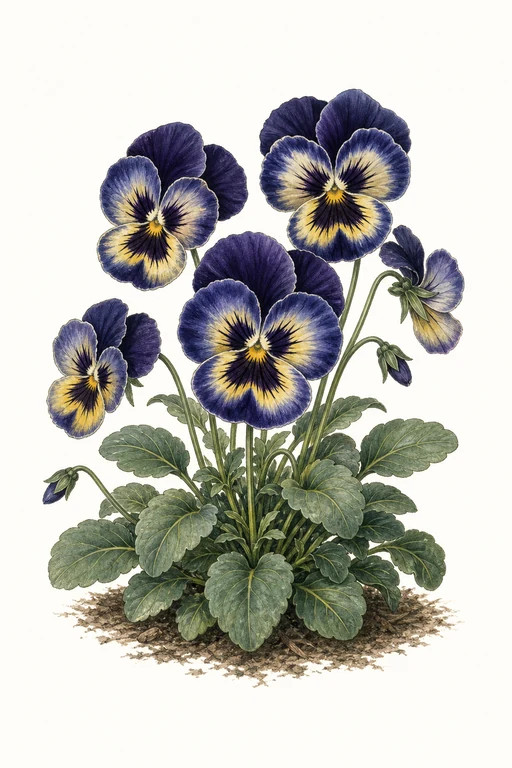
Velvety petals bloom in a painterly spectrum of indigo, midnight violet, and soft butter-gold, with bold, face-like markings that look almost lit from within.
Got The Blues pansies carry a gently ruffled, satiny texture and a compact, tidy habit—ideal for cool-season color that feels lush and romantic. Enjoy them as a showy garden centerpiece and as a vivid accent for beds, borders, and containers throughout the season.
Light: Part SunMaturity: 70 DaysHabit: Rosette
Crop Dates : 4a
| Milestone | Date |
|---|---|
| Start Indoors | Mar 6th |
| Last Frost | May 15th |
| Transplant / Sow Outdoors | May 15th |
| Harvest Begins | Jul 24th |
| Harvest Ends | Sep 24th |
Crop Details
| Trait | Value |
|---|---|
| Days to Maturity | 70 |
| Sun Requirements | Part Sun |
| Growth Habit | Rosette |
| Support Needed | None |
| Planting Depth | Surface |
| Germination Temp (°F) | 65 |
| Min Soil Temp (°F) | 40 |
| Min Night Temp (°F) | 28 |
| Harden Off (days) | 7 |
Culinary Notes

Chef's Note
Edible pansies like “Got The Blues” bring cool-season color with a gentle violet-leaning flavor—think satin petals over bright, acidic things. Add them at the end (or keep them chilled) so their texture stays velvety instead of collapsing into the plate.

Best Uses
- freshly plated as a vivid garnish over chilled starters
- stirred into a quick butter pan reduction at the last second for color
- folded into soft cheeses and honey for a no-cook dessert bite
- used to top sandwiches where they won’t be left to weep

Flavor Profile

Kitchen Pairings
Frequently Asked Questions
What pest or disease most commonly affects Viola × wittrockiana (pansies) and how can I treat it?
How often should I water Viola × wittrockiana during peak growth (about mid-season to bloom)?
How can I tell when Viola × wittrockiana is ready to harvest?
Sowing Tips

Transplant Conditions
Wait until soil reaches 40°F and nights stay above 28°F before moving outdoors. Harden off for 7 days first.
Expert Note

For the bluest, longest-lasting blooms, keep plants in cool weather (aim for spring or fall) and avoid hot, drying conditions.