
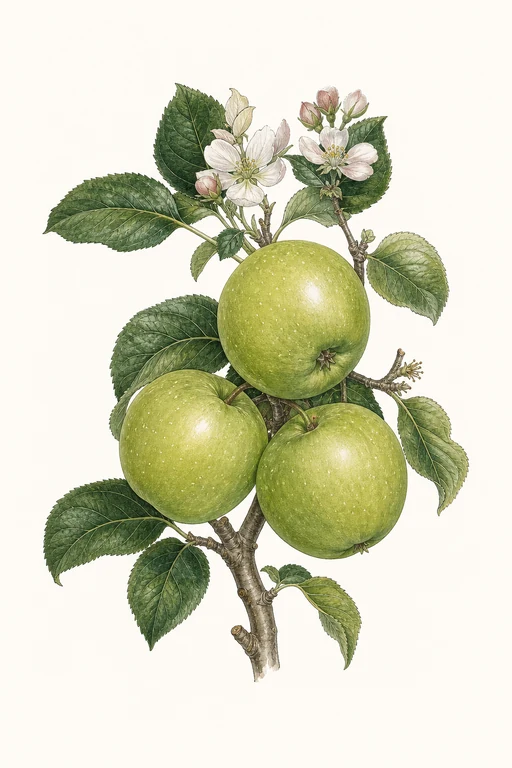
Granny Smith Improved
Crisp as fresh-cut glass, Granny Smith Improved brings a bright, tart snap with a clean, apple-sweet backbone—an orchard-fresh flavor that lingers on the palate.
The fruit develops a classic apple-green glow with a firm, fine-grained texture that holds its shape beautifully for long-lasting enjoyment. Grow this dependable, long-season favorite for crisp, refreshing fruit straight from your own backyard orchard.
Light: Full SunMaturity: 365 DaysHabit: Shrub
Planting schedules and alerts are optimized for Columbus (Zone 6b).
Crop Dates
| Milestone | Date |
|---|---|
| Last Frost | Apr 25th |
| Growing Approach | Protected Environment Only |
Crop Details
| Trait | Value |
|---|---|
| Days to Maturity | 365 |
| Sun Requirements | Full Sun |
| Growth Habit | Shrub |
| Support Needed | None |
| Planting Depth | Normal |
| Germination Temp (°F) | 70 |
| Min Soil Temp (°F) | 50 |
| Min Night Temp (°F) | 28 |
| Harden Off (days) | Not Required |
Culinary Notes

Chef's Note
Built for contrast: the firm, fine-grained flesh stays crisp in the presence of dressing and heat, while the bracing tartness keeps desserts from tasting cloying. Slice it thin and it behaves like fresh-cut produce—snap-forward, juice-clean, and ready to cut through fat and salt.

Best Uses
- thin slices for slaws that stay crunchy
- baking pies where the bite holds (not applesauce-tender)
- grating raw into salads with salty dressings
- cider or hard-apple base for bright acidity

Flavor Profile

Kitchen Pairings
Frequently Asked Questions
What’s a common disease problem for Malus domestica (Granny Smith apples), and how do I manage it at home?
How often should I water Malus domestica during the main growing season, and what soil moisture level should I aim for?
How can I tell when Malus domestica ‘Granny Smith’ is ready to harvest?
Sowing Tips

Transplant Conditions
Wait until soil reaches 50°F and nights stay above 28°F before moving outdoors.
Expert Note

For reliable yields, plant on a dwarfing/semi-dwarfing rootstock matched to your climate and ensure at least one compatible apple pollinator cultivar nearby.