
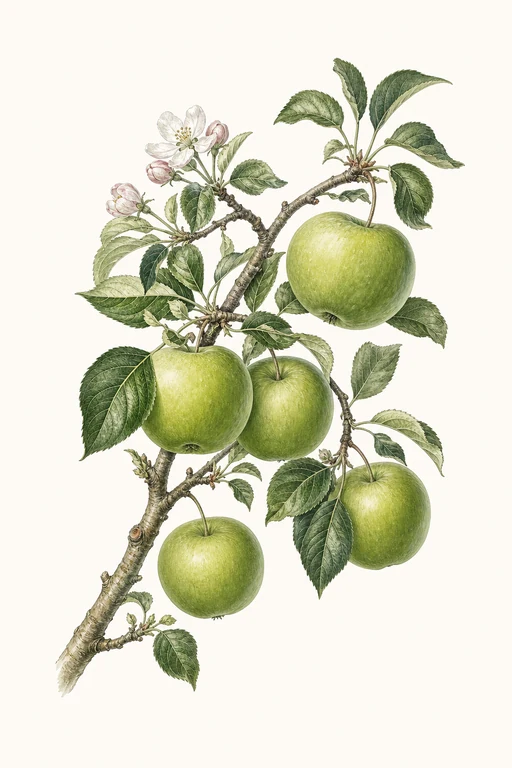
Granny Smith
Crisp as fresh-cut glass, Granny Smith brings a bright, tart snap with a clean, mouthwatering acidity that lingers pleasantly.
The fruit is firm and juicy, holding its shape beautifully from orchard to table, with a classic apple crunch and a refreshing green glow. Ideal for fresh snacking and for making bold, tangy sauces and preserves that celebrate its signature bite.
Light: Full SunMaturity: 120 DaysHabit: Perennial_Crown
Planting schedules and alerts are optimized for Columbus (Zone 6b).
Crop Dates
| Milestone | Date |
|---|---|
| Start Indoors | Direct Sow |
| Last Frost | Apr 25th |
| Transplant / Sow Outdoors | Apr 25th |
| Harvest Begins | Aug 23rd |
| Harvest Ends | Oct 16th |
Crop Details
| Trait | Value |
|---|---|
| Days to Maturity | 120 |
| Sun Requirements | Full Sun |
| Growth Habit | Perennial_Crown |
| Support Needed | None |
| Planting Depth | Normal |
| Germination Temp (°F) | 60 |
| Min Soil Temp (°F) | 40 |
| Min Night Temp (°F) | 28 |
| Harden Off (days) | Not Required |
Culinary Notes

Chef's Note
Granny Smith’s aggressive tartness and glassy crunch make it a cut above for anything where you want the fruit to stay bright instead of softening into sweetness. It’s the apple you reach for when acidity should lead—sauces, glazes, and pairings with sharp fat (like cheddar) really sing.

Best Uses
- fresh-eaten slices with a dusting of flaky salt
- tart apple compote or quick-cooked filling that keeps its shape
- bold barbecue-style apple glaze for pork or chicken
- cheddar-and-apple sandwiches where the fruit stays snappy

Flavor Profile

Kitchen Pairings
Frequently Asked Questions
What is a common disease problem for Malus domestica (Granny Smith) and how can I prevent or treat it?
How often should I water my Granny Smith apple during the main growing season?
How do I tell when a Granny Smith apple (Malus domestica) is ready to harvest?
Sowing Tips

Transplant Conditions
Wait until soil reaches 40°F and nights stay above 28°F before moving outdoors.
Expert Note

For best Granny Smith performance, plant in full sun with well-drained soil and prioritize local rootstock recommendations and winter-chill compatibility.