
Green Meat
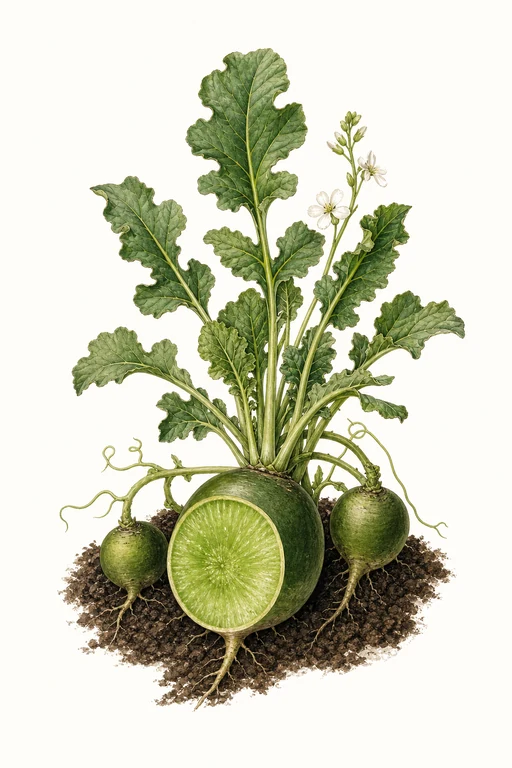
Sink your teeth into Green Meat’s jewel-toned interior—crisp, juicy flesh with a cool, clean bite and a pleasantly mild radish snap.
The exterior forms a round, watermelon-style radish with a fresh green skin that gives way to a striking green core, tender and succulent at maturity. Grow it for show-stopping freshness in salads and platters, or slice it for vibrant color in quick pickles and bright, zesty sauces.
Light: Full SunMaturity: 45 DaysHabit: Taproot
Crop Dates : 8a
| Milestone | Date |
|---|---|
| Start Indoors | Direct Sow |
| Last Frost | Apr 1st |
| Transplant / Sow Outdoors | Apr 1st |
| Harvest Begins | May 16th |
| Harvest Ends | Nov 5th |
Crop Details
| Trait | Value |
|---|---|
| Days to Maturity | 45 |
| Sun Requirements | Full Sun |
| Growth Habit | Taproot |
| Support Needed | None |
| Planting Depth | Normal |
| Germination Temp (°F) | 55 |
| Min Soil Temp (°F) | 45 |
| Min Night Temp (°F) | 35 |
| Harden Off (days) | Not Required |
Culinary Notes

Chef's Note
Green Meat is a watermelon-style radish: the juicy, milder bite keeps its crunch even when you dress it or pickle it briefly. It’s built for raw impact—fresh slices or fast-pickled rounds that give you that cool snap and emerald interior in every forkful.

Best Uses
- thin-moon slices on a salad platter where the color reads first
- quick pickles for high-contrast crunch and fresh-green visual pop
- zesty radish-chilled sauces (blended with yogurt or crème fraîche)

Flavor Profile

Frequently Asked Questions
What’s the most common problem for Raphanus sativus (radish) and how do I fix it?
How often should I water Raphanus sativus during the main growing phase?
How can I tell when my radishes (Raphanus sativus) are ready to harvest?
Sowing Tips

Transplant Conditions
Wait until soil reaches 45°F and nights stay above 35°F before moving outdoors.
Expert Note

Sow watermelon radish directly in loose, well-drained soil and avoid transplanting to prevent root forking and toughness.