
Grolot
Aromatic and richly savory, Grolot shallots bring a gentle sweetness that blooms into a deep, oniony warmth—ideal for gardeners who love flavor with a refined finish.
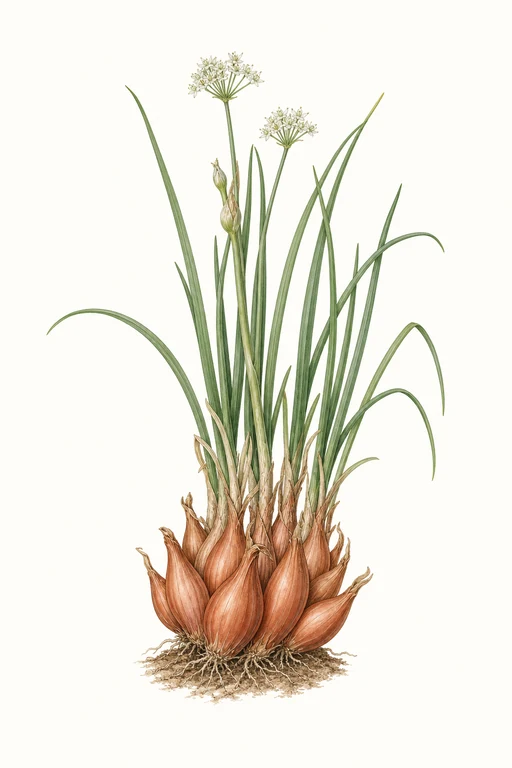
The bulbs form neat, elongated clusters with a smooth, papery skin and a tender, juicy interior, offering a delicate bite and silky texture when used fresh or gently cooked. Grow Grolot for reliable, harvest-ready bulbs and a pantry-worthy supply that shines in sauces, dressings, and pickling.
Light: Full SunMaturity: 120 DaysHabit: Bulbing
Planting schedules and alerts are optimized for Columbus (Zone 6b).
Crop Dates
| Milestone | Date |
|---|---|
| Start Indoors | Direct Sow |
| Last Frost | Apr 25th |
| Transplant / Sow Outdoors | May 9th |
| Harvest Begins | Sep 6th |
| Harvest Ends | Oct 16th |
Crop Details
| Trait | Value |
|---|---|
| Days to Maturity | 120 |
| Sun Requirements | Full Sun |
| Growth Habit | Bulbing |
| Support Needed | None |
| Planting Depth | Normal |
| Germination Temp (°F) | 70 |
| Min Soil Temp (°F) | 50 |
| Min Night Temp (°F) | 35 |
| Harden Off (days) | Not Required |
Culinary Notes

Chef's Note
Grolot has that “allium” perfume with a softer sweetness that blooms fast—so it’s built for fast cooking and emulsions, not long, aggressive caramelizing. When you mince it fine, it turns meltingly tender and gives your sauce a silky, onion-forward warmth without the sharp edge.

Best Uses
- thin rings or fine mincing in raw vinaigrettes where it stays floral instead of harsh
- quick sautéing to lay the base for pan sauces and braises without browning to bitterness
- slender pickles and quick-pickled shallot jars for crisp, perfumed tang
- silky dressings and emulsions where it dissolves into the fat

Flavor Profile

Frequently Asked Questions
What pest or disease most commonly affects Allium cepa var. aggregatum (grolot), and how can I control it?
How often should I water grolot during the main growing phase?
How do I know when grolot (Allium cepa var. aggregatum) is ready to harvest after ~120 days?
Sowing Tips

Transplant Conditions
Wait until soil reaches 50°F and nights stay above 35°F before moving outdoors.
Expert Note

For sweet, tender shallot bulbs, plant sets (or transplants) in cool spring soil and keep moisture steady until the tops begin to fall over.