
Guernsey
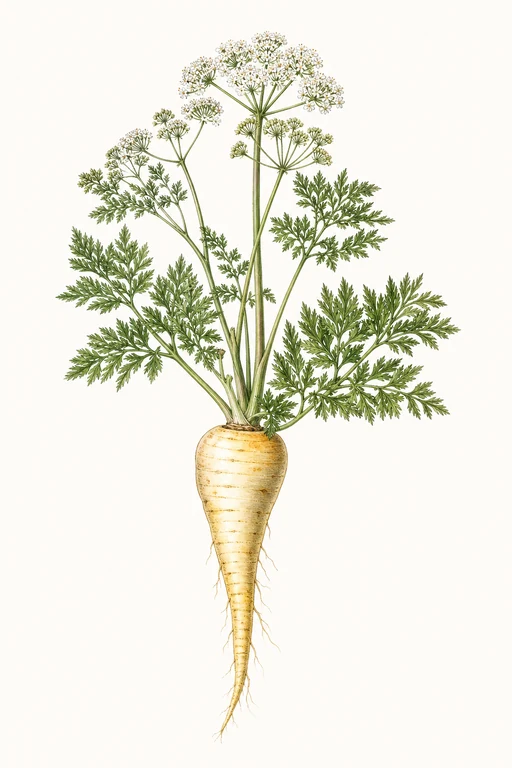
Sweet, honeyed roots with a creamy, pearly core—Guernsey parsnips develop a tender, fine-grained texture that feels almost silk-smooth when roasted.
Their flavor deepens into a warm, nutty sweetness, making them a standout for hearty winter favorites, from oven-roasting to velvety mash and rich, spoonable sauces. For home gardeners, Guernsey is a reliable, long-season choice that rewards patience with beautifully shaped, market-ready roots at about 105 days.
Light: Full SunMaturity: 105 DaysHabit: Taproot
Location not set yet
Location not set yet
Enter your ZIP for local crop dates
Guernsey Planting Dates by USDA Zone
Estimated US hardiness-zone windows for sow, transplant, and harvest. Enter a US ZIP above for exact local dates, or open a zone below.
| Zone | Start Indoors | Sow / Transplant | Harvest |
|---|---|---|---|
| Zone 1a | Protected Environment Only | ||
| Zone 1b | Protected Environment Only | ||
| Zone 2a | Protected Environment Only | ||
| Zone 2b | Protected Environment Only | ||
| Zone 3a | Direct Sow | May 15th | Aug 28th – Sep 1st |
| Zone 3b | Direct Sow | May 19th | Sep 1st – Sep 21st |
| Zone 4a | Direct Sow | May 15th | Aug 28th – Sep 24th |
| Zone 4b | Direct Sow | May 13th | Aug 26th – Sep 27th |
| Zone 5a | Direct Sow | May 8th | Aug 21st – Sep 30th |
| Zone 5b | Direct Sow | May 4th | Aug 17th – Oct 5th |
| Zone 6a | Direct Sow | May 1st | Aug 14th – Oct 10th |
| Zone 6b | Direct Sow | Apr 25th | Aug 8th – Oct 16th |
| Zone 7a | Direct Sow | Apr 20th | Aug 3rd – Oct 20th |
| Zone 7b | Direct Sow | Apr 10th | Jul 24th – Oct 28th |
| Zone 8a | Direct Sow | Apr 1st | Jul 15th – Nov 5th |
| Zone 8b | Direct Sow | Mar 23rd | Jul 6th – Nov 12th |
| Zone 9a | Direct Sow | Mar 6th | Jun 19th – Nov 26th |
| Zone 9b | Direct Sow | Feb 9th | May 25th – Dec 9th |
| Zone 10a | — | Oct 1st | Jan 14th – Feb 28th |
| Zone 10b | — | Oct 1st | Jan 14th – Feb 28th |
| Zone 11a | — | Oct 1st | Jan 14th – Feb 28th |
| Zone 11b | — | Oct 1st | Jan 14th – Feb 28th |
| Zone 12a | — | Oct 1st | Jan 14th – Feb 28th |
| Zone 12b | — | Oct 1st | Jan 14th – Feb 28th |
| Zone 13a | — | Oct 1st | Jan 14th – Feb 28th |
| Zone 13b | — | Oct 1st | Jan 14th – Feb 28th |
Crop Details
| Trait | Value |
|---|---|
| Days to Maturity | 105 |
| Sun Requirements | Full Sun |
| Growth Habit | Taproot |
| Support Needed | None |
| Planting Depth | Normal |
| Germination Temp (°F) | 50 |
| Min Soil Temp (°F) | 45 |
| Min Night Temp (°F) | 28 |
| Harden Off (days) | Not Required |
Culinary Notes

Chef's Note
Guernsey parsnips have that rare, tender fine-grain that turns silky in the oven and stays cohesive in mash—less fibrous crunch, more pearly, honeyed sweetness. Roast them hard for caramel edges, then pair with brown butter and sage for a warm, nutty finish that tastes almost like winter comfort turned savory.

Best Uses
- roast until lacquered at the edges, then scoop for caramelized bite
- velvety parsnip mash (no graininess, it stays silky)
- simmer into a spoonable cream sauce for chicken or pork
- braise and finish with brown butter for a nutty gloss

Flavor Profile

Frequently Asked Questions
What pest or disease commonly affects Pastinaca sativa (parsnip/“Guernsey”) and what should I do?
How often should I water Pastinaca sativa during the main growing phase?
How do I tell when Guernsey (Pastinaca sativa) is ready to harvest?
Sowing Tips

Transplant Conditions
Wait until soil reaches 45°F and nights stay above 28°F before moving outdoors.
Expert Note

For straight, conical roots, keep the soil evenly moist during germination and avoid disturbing the bed once seedlings emerge.