
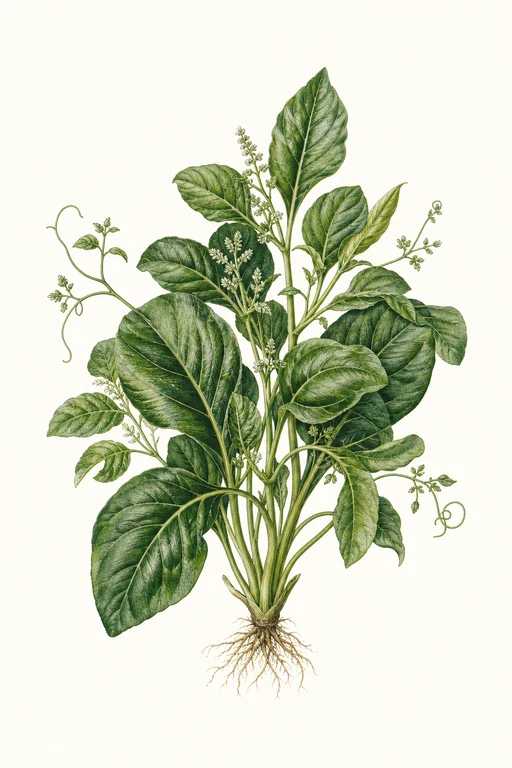
Guyana Callaloo
Tender, velvety leaves emerge with a lush, spinach-like richness—deep green with a faintly sweet, earthy allure that feels instantly garden-fresh.
Guyana Callaloo forms an abundant, upright growth habit with succulent foliage that stays pleasantly tender for quick harvests, ideal for steaming, sautéing, and stirring into hearty pot dishes, as well as for bold sauces and pickling-style preserves. Grow it for a steady supply of flavorful greens from early summer through the warmest weeks.
Light: Full SunMaturity: 35 DaysHabit: Upright
Planting schedules and alerts are optimized for Columbus (Zone 6b).
Crop Dates
| Milestone | Date |
|---|---|
| Start Indoors | Direct Sow |
| Last Frost | Apr 25th |
| Transplant / Sow Outdoors | Apr 25th |
| Harvest Begins | May 30th |
| Harvest Ends | Oct 16th |
Crop Details
| Trait | Value |
|---|---|
| Days to Maturity | 35 |
| Sun Requirements | Full Sun |
| Growth Habit | Upright |
| Support Needed | None |
| Planting Depth | Normal |
| Germination Temp (°F) | 75 |
| Min Soil Temp (°F) | 65 |
| Min Night Temp (°F) | 50 |
| Harden Off (days) | Not Required |
Culinary Notes

Chef's Note
Guyana Callaloo has that silky, tender leaf that wilts fast without turning stringy, so it eats lush rather than fibrous. Built for bold, fatty liquids (like coconut or oily broths) and bright acid—fold it in at the end so it stays green and plush instead of dulling into the pot.

Best Uses
- quick steam then squeeze-dry for rich sides
- sauté with a hot fat until just wilted, then fold into rice or beans
- stir into slow-simmered soups or callaloo-style pot dishes
- blend into a thick, green sauce or puree for spoonable pasta

Flavor Profile

Kitchen Pairings
Frequently Asked Questions
What pest or disease problem commonly affects Amaranthus viridis (Guyana callaloo), and how do I control it?
How often should I water Amaranthus viridis during its main leafy growth, and what soil moisture should I maintain?
How can I tell when Guyana callaloo (Amaranthus viridis) is ready to harvest?
Sowing Tips

Transplant Conditions
Wait until soil reaches 65°F and nights stay above 50°F before moving outdoors.
Expert Note

For best results, sow seed directly after frost when soil is warm, keep evenly moist until established, and harvest outer leaves frequently to drive repeat growth.