
Halblange White
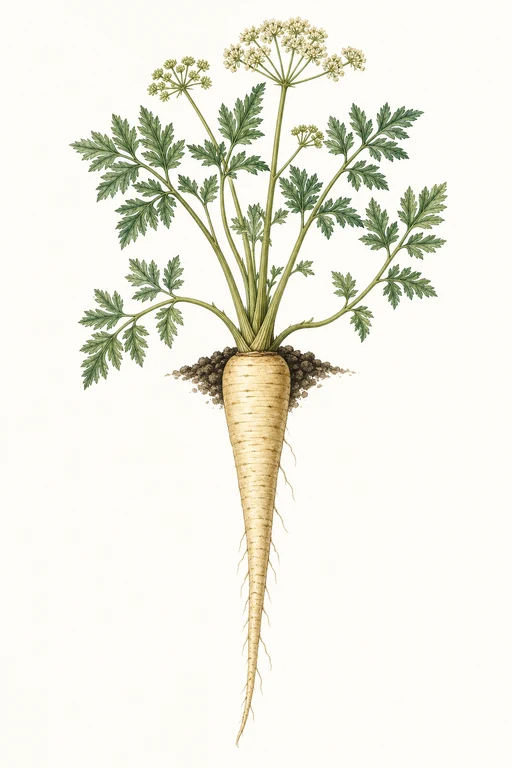
Sweetly fragrant and luminous at harvest, Halblange White parsnips develop long, tapered roots with a creamy-white skin and a smooth, finely grained texture.
Their flavor is rich and gently nutty, turning especially aromatic when roasted and also prized for fresh use in salads and slaws, as well as for velvety purées and savory sauces. A dependable long-root type for home gardens, it rewards patient growers with roots that hold their elegance from soil to serving.
Light: Full SunMaturity: 110 DaysHabit: Taproot
Location not set yet
Location not set yet
Enter your ZIP for local crop dates
Halblange White Planting Dates by USDA Zone
Estimated US hardiness-zone windows for sow, transplant, and harvest. Enter a US ZIP above for exact local dates, or open a zone below.
| Zone | Start Indoors | Sow / Transplant | Harvest |
|---|---|---|---|
| Zone 1a | Protected Environment Only | ||
| Zone 1b | Protected Environment Only | ||
| Zone 2a | Protected Environment Only | ||
| Zone 2b | Protected Environment Only | ||
| Zone 3a | Protected Environment Only | ||
| Zone 3b | Direct Sow | May 19th | Sep 6th – Sep 21st |
| Zone 4a | Direct Sow | May 15th | Sep 2nd – Sep 24th |
| Zone 4b | Direct Sow | May 13th | Aug 31st – Sep 27th |
| Zone 5a | Direct Sow | May 8th | Aug 26th – Sep 30th |
| Zone 5b | Direct Sow | May 4th | Aug 22nd – Oct 5th |
| Zone 6a | Direct Sow | May 1st | Aug 19th – Oct 10th |
| Zone 6b | Direct Sow | Apr 25th | Aug 13th – Oct 16th |
| Zone 7a | Direct Sow | Apr 20th | Aug 8th – Oct 20th |
| Zone 7b | Direct Sow | Apr 10th | Jul 29th – Oct 28th |
| Zone 8a | Direct Sow | Apr 1st | Jul 20th – Nov 5th |
| Zone 8b | Direct Sow | Mar 23rd | Jul 11th – Nov 12th |
| Zone 9a | Direct Sow | Mar 6th | Jun 24th – Nov 26th |
| Zone 9b | Direct Sow | Feb 9th | May 30th – Dec 9th |
| Zone 10a | — | Oct 1st | Jan 19th – Feb 28th |
| Zone 10b | — | Oct 1st | Jan 19th – Feb 28th |
| Zone 11a | — | Oct 1st | Jan 19th – Feb 28th |
| Zone 11b | — | Oct 1st | Jan 19th – Feb 28th |
| Zone 12a | — | Oct 1st | Jan 19th – Feb 28th |
| Zone 12b | — | Oct 1st | Jan 19th – Feb 28th |
| Zone 13a | — | Oct 1st | Jan 19th – Feb 28th |
| Zone 13b | — | Oct 1st | Jan 19th – Feb 28th |
Crop Details
| Trait | Value |
|---|---|
| Days to Maturity | 110 |
| Sun Requirements | Full Sun |
| Growth Habit | Taproot |
| Support Needed | None |
| Planting Depth | Normal |
| Germination Temp (°F) | 55 |
| Min Soil Temp (°F) | 45 |
| Min Night Temp (°F) | 28 |
| Harden Off (days) | Not Required |
Culinary Notes

Chef's Note
Halblange White has that long-root, finely grained interior that turns lush and spoonable without going starchy or grainy—roast it and the sweetness gets aromatic, almost honeyed. It’s especially good when you want a creaminess from the vegetable itself, so it plays perfectly with butter, cream, and sage.

Best Uses
- roasted wedges, tossed hard at high heat for caramelized edges
- silky parsnip purée (pass through a mill for that smooth finish)
- velvety braises and stovetop sauces where it melts into the liquid
- thin shave salads and slaws for crisp, clean crunch

Flavor Profile

Frequently Asked Questions
What pest or disease most commonly affects Pastinaca sativa (parsnip), and how can I prevent it?
How often should I water Pastinaca sativa during the main growing phase to grow straight roots?
How do I tell when Pastinaca sativa is ready to harvest?
Sowing Tips

Transplant Conditions
Wait until soil reaches 45°F and nights stay above 28°F before moving outdoors.
Expert Note

Sow parsnip seed directly where they’ll grow—keep the bed evenly moist until emergence, then thin to avoid forked roots.