
Hollow Crown
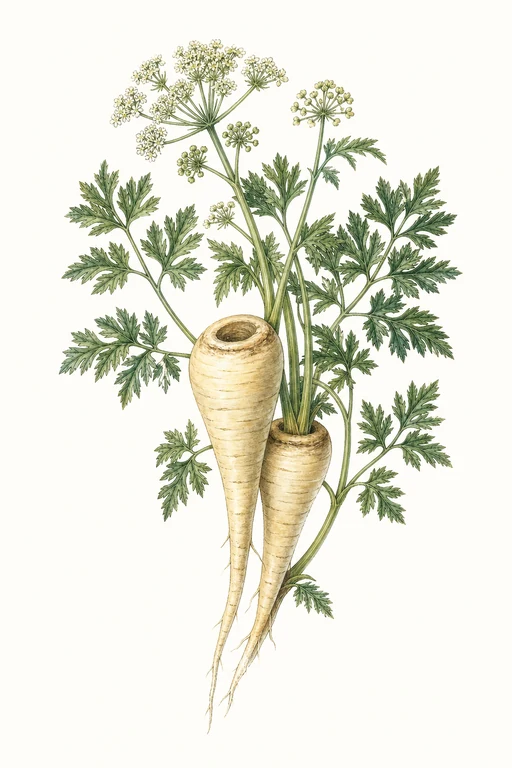
Sweet, aromatic roots with a famously clean, creamy interior—Hollow Crown parsnip delivers a velvety, honeyed flavor and a tender bite that shines when roasted until caramel-browned at the edges.
The long, smooth roots hold their shape well, making them ideal for turning into silky purées and rich sauces, or for enjoying fresh from the garden with a gentle, nutty sweetness. Grow Hollow Crown for a dependable, show-stopping harvest that brings autumn warmth to every planting row.
Light: Full SunMaturity: 120 DaysHabit: Taproot
Crop Dates : 5a
| Milestone | Date |
|---|---|
| Start Indoors | Direct Sow |
| Last Frost | May 8th |
| Transplant / Sow Outdoors | May 8th |
| Harvest Begins | Sep 5th |
| Harvest Ends | Sep 30th |
Crop Details
| Trait | Value |
|---|---|
| Days to Maturity | 120 |
| Sun Requirements | Full Sun |
| Growth Habit | Taproot |
| Support Needed | None |
| Planting Depth | Normal |
| Germination Temp (°F) | 50 |
| Min Soil Temp (°F) | 45 |
| Min Night Temp (°F) | 28 |
| Harden Off (days) | Not Required |
Culinary Notes

Chef's Note
Hollow Crown’s creamy interior turns into a spoon-smooth purée without tasting fibrous or sharp—roast it hard enough to bronze the outside and it gets that honeyed, almost custardy sweetness. It’s tailor-made for velvet textures: purée, soup, and rich sides where the root flavor stays clean and aromatic.

Best Uses
- roast until edges caramelize, then finish with butter or olive oil for glossy sweetness
- silky parsnip purée for a spoonable, velvety side
- thick parsnip-based soup or purée to anchor stocks with natural body
- grate raw or lightly pickled for a crisp, sweet salad bite

Flavor Profile

Kitchen Pairings
Frequently Asked Questions
What pest or disease most commonly affects Pastinaca sativa (Hollow Crown parsnips), and how do I manage it?
How often should I water Hollow Crown parsnips (Pastinaca sativa) during the main growing phase?
How can I tell when Hollow Crown parsnips (Pastinaca sativa) are ready to harvest?
Sowing Tips

Transplant Conditions
Wait until soil reaches 45°F and nights stay above 28°F before moving outdoors.
Expert Note

For best Hollow Crown results, sow directly where the roots will grow and keep the bed consistently moist until germination—parsnips resent root disturbance.