
Honeynut
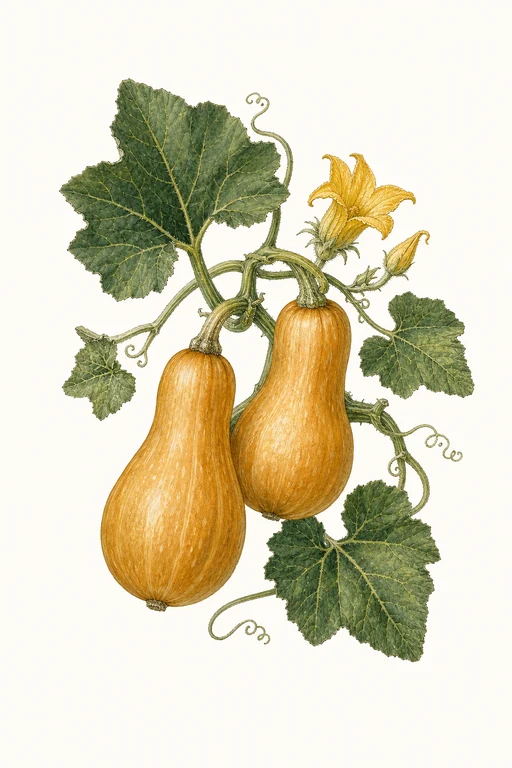
Honeyed sweetness pours from every ripe Honeynut squash—warm, golden flesh with a silky, spoonable texture that feels almost custard-smooth.
The long, tapered silhouette roasts to a deep caramel glow, delivering rich, nutty flavor that shines in hearty autumn favorites and velvety purées.
Light: Full SunMaturity: 95 DaysHabit: Vine
Planting schedules and alerts are optimized for Columbus (Zone 6b).
Crop Dates
| Milestone | Date |
|---|---|
| Start Indoors | Apr 25th |
| Last Frost | Apr 25th |
| Transplant / Sow Outdoors | May 9th |
| Harvest Begins | Aug 12th |
| Harvest Ends | Oct 16th |
Crop Details
| Trait | Value |
|---|---|
| Days to Maturity | 95 |
| Sun Requirements | Full Sun |
| Growth Habit | Vine |
| Support Needed | Trellis |
| Planting Depth | Normal |
| Germination Temp (°F) | 70 |
| Min Soil Temp (°F) | 65 |
| Min Night Temp (°F) | 55 |
| Harden Off (days) | 10 |
Culinary Notes

Chef's Note
Honeynut’s moschata-type flesh is built for texture: it roasts into caramel-soft custard that purées silky instead of turning stringy or watery. Pair its honeyed sweetness with sharp acid and browned fat—otherwise it can tip too dessert-like on the palate.

Best Uses
- slow-roast wedges until the edges go dark and jammy
- velvety purée that stays spoonable (no grainy mouthfeel)
- thick, autumnal soup with a swirl—treat it like a custard base
- sheet-pan roasting with salty fat to balance the sweetness

Flavor Profile

Frequently Asked Questions
What pest or disease most commonly affects Cucurbita moschata (honeynut), and how can I manage it?
How often should I water honeynut during peak growth, and what soil moisture level should I aim for?
How do I tell when honeynut (Cucurbita moschata) is ready to harvest?
Sowing Tips

Transplant Conditions
Wait until soil reaches 65°F and nights stay above 55°F before moving outdoors. Harden off for 10 days first.

Direct Sow Preferred
Sensitive roots — does not transplant well. If starting indoors, use biodegradable pots and disturb roots as little as possible when moving outdoors.
Expert Note

Warm soil is everything for mini butternuts—transplant only when nighttime temps are consistently warm and the soil is well above 65°F to avoid stalled growth.