
Howden Biggie
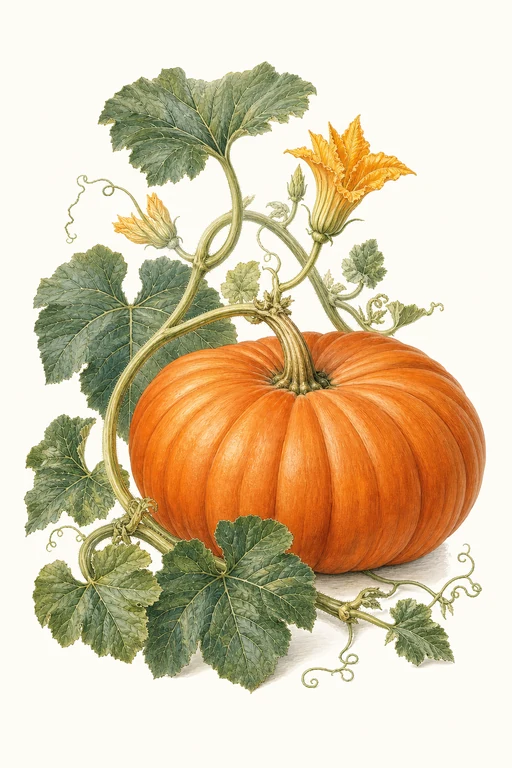
Sink your senses into Howden Biggie’s rich, sunlit presence—thick-skinned and deeply ribbed, with a warm, classic orange that glows from garden to porch.
The flesh is dense and velvety, offering a satisfying bite that holds its shape beautifully for hearty, comforting preparations. Grow this vigorous, long-season pumpkin for standout centerpiece fruit and reliable performance at about 110 days to maturity.
Light: Full SunMaturity: 110 DaysHabit: Vine
Crop Dates : 6b
| Milestone | Date |
|---|---|
| Start Indoors | Direct Sow |
| Last Frost | Apr 25th |
| Transplant / Sow Outdoors | May 9th |
| Harvest Begins | Aug 27th |
| Harvest Ends | Oct 16th |
Crop Details
| Trait | Value |
|---|---|
| Days to Maturity | 110 |
| Sun Requirements | Full Sun |
| Growth Habit | Vine |
| Support Needed | Trellis |
| Planting Depth | Normal |
| Germination Temp (°F) | 85 |
| Min Soil Temp (°F) | 65 |
| Min Night Temp (°F) | 55 |
| Harden Off (days) | 10 |
Culinary Notes

Chef's Note
Howden Biggie’s dense, low-sheen flesh roasts into caramelized, non-watery cubes—no thin puree, no sad stringiness. It’s made for the kind of rich pumpkin cooking where texture stays sculpted: puree that spoon-stands and pies that cut clean.

Best Uses
- roasted cubes for caramelized edges and clean bite
- thick pumpkin puree for velvety soups and risotto
- baking: sturdy filling for pies that slice without slumping
- pan-seared wedges or steaks for browning and scoopable texture

Flavor Profile

Frequently Asked Questions
What pest or disease is most common for Cucurbita pepo (Howden-type winter squash), and what should I do first?
How often should I water Cucurbita pepo during the main growing phase (after it starts vining)?
How do I tell when Howden Biggie (Cucurbita pepo) is ready to harvest?
Sowing Tips

Transplant Conditions
Wait until soil reaches 65°F and nights stay above 55°F before moving outdoors. Harden off for 10 days first.

Direct Sow Preferred
Sensitive roots — does not transplant well. If starting indoors, use biodegradable pots and disturb roots as little as possible when moving outdoors.
Expert Note

For best yields and fewer misshapen fruit, plant in warm soil and keep vines evenly watered after flowering while avoiding wet foliage late in the day.