
Husk Cherry
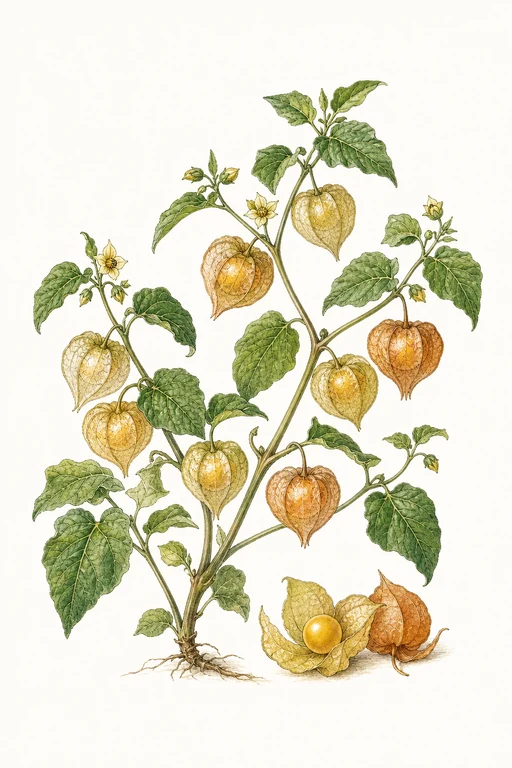
Aromatically sweet and sun-warmed, Husk Cherry ripens into jewel-like golden berries cradled in papery lantern husks that deepen to a russet glow as they mature.
The fruit’s flavor is bright and tangy with a honeyed finish, and its texture turns tender-juicy at peak ripeness. Grow Husk Cherry for fresh snacking and for vivid preserves and sauces where its distinctive, lightly tropical character shines through.
Light: Full SunMaturity: 70 DaysHabit: Indeterminate
Planting schedules and alerts are optimized for Columbus (Zone 6b).
Crop Dates
| Milestone | Date |
|---|---|
| Start Indoors | Mar 14th |
| Last Frost | Apr 25th |
| Transplant / Sow Outdoors | Jun 20th |
| Harvest Begins | Aug 29th |
| Harvest Ends | Oct 16th |
Crop Details
| Trait | Value |
|---|---|
| Days to Maturity | 70 |
| Sun Requirements | Full Sun |
| Growth Habit | Indeterminate |
| Support Needed | Stake |
| Planting Depth | Normal |
| Germination Temp (°F) | 75 |
| Min Soil Temp (°F) | 60 |
| Min Night Temp (°F) | 50 |
| Harden Off (days) | 7 |
Culinary Notes

Chef's Note
This variety eats like a miniature tart-sweet fruit: juicy enough to spoon, aromatic enough to show up even after a quick reduction. Cook it briefly—long heat pushes it too far into jam territory—so aim for a glossy coat that still tastes sun-warmed and bright.

Best Uses
- fresh snacking—chilled, popped from the husk like tiny fruit
- stove-top preserves that set with a glossy, ember-gold finish
- stirred into warm oatmeal or yogurt for a tart-sweet contrast
- quick pan sauce for pork or chicken, reduced until it coats

Flavor Profile

Kitchen Pairings
Frequently Asked Questions
What pest or disease commonly affects Physalis philadelphica (husk cherry), and how can I control it?
How often should I water Physalis philadelphica during the main growing phase, and what soil moisture level is ideal?
How do I know when Physalis philadelphica is ready to harvest?
Sowing Tips

Transplant Conditions
Wait until soil reaches 60°F and nights stay above 50°F before moving outdoors. Harden off for 7 days first.
Expert Note

Grow husk cherry like a small tomato—transplant only when nighttime temperatures are reliably warm, and keep plants evenly moist to prevent blossom drop.