
Hydrangea
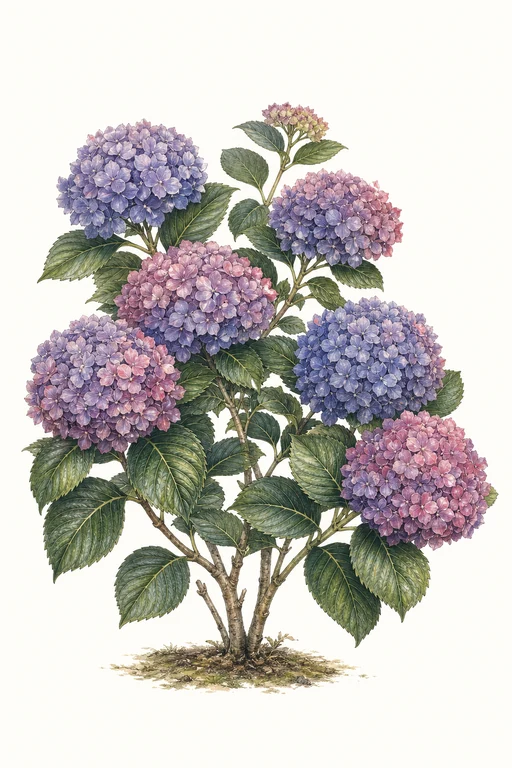
Velvety, globe-like blooms in Hydrangea (Hydrangea macrophylla) arrive as a living bouquet—cool-toned petals that seem to hold light like satin.
Expect lush, rounded flower heads with a softly textured, slightly papery feel, carried on sturdy branches for a statuesque presence in the garden. Grow it for show-stopping ornamental color in beds, borders, and containers, where its dramatic inflorescences become the season’s centerpiece.
Light: Part SunHabit: Shrub
Planting schedules and alerts are optimized for Columbus (Zone 6b).
Crop Dates
| Milestone | Date |
|---|---|
| Start Indoors | Direct Sow |
| Last Frost | Apr 25th |
| Transplant / Sow Outdoors | Apr 25th |
| Harvest Begins | Apr 25th |
| Harvest Ends | Oct 16th |
Crop Details
| Trait | Value |
|---|---|
| Days to Maturity | N/A |
| Sun Requirements | Part Sun |
| Growth Habit | Shrub |
| Support Needed | None |
| Planting Depth | Normal |
| Germination Temp (°F) | 65 |
| Min Soil Temp (°F) | 50 |
| Min Night Temp (°F) | 28 |
| Harden Off (days) | 7 |
Frequently Asked Questions
What pest or disease commonly affects Hydrangea macrophylla, and how can I control it?
How often should I water Hydrangea macrophylla during active growth?
How do I know when Hydrangea macrophylla is ready to harvest for blooms or cut flowers?
Sowing Tips

Transplant Conditions
Wait until soil reaches 50°F and nights stay above 28°F before moving outdoors. Harden off for 7 days first.
Expert Note

Plant in partial shade and keep soil evenly moist; for bigleaf hydrangea, protect spent-bloom stems/buds over winter to preserve next season’s flowers.