
Illusion Midnight Lace
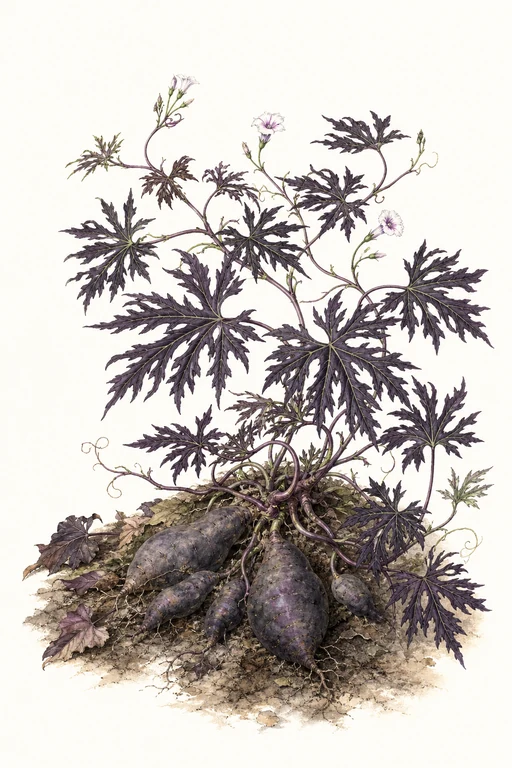
Velvety, near-black foliage with a lacey, moonlit shimmer makes ‘Illusion Midnight Lace’ a showpiece from the first sprout to the final flourish.
The tubers develop with a deep, mysterious tone beneath the ground, offering a rich, earthy sweetness and a creamy, tender bite when grown for harvest. Let it spill from containers or trail along beds for dramatic color contrast, then bring its sculptural roots into the spotlight for bold, garden-to-table appeal.
Light: Full SunMaturity: 90 DaysHabit: Vine
Planting schedules and alerts are optimized for Columbus (Zone 6b).
Crop Dates
| Milestone | Date |
|---|---|
| Start Indoors | Direct Sow |
| Last Frost | Apr 25th |
| Transplant / Sow Outdoors | Jun 20th |
| Harvest Begins | Sep 18th |
| Harvest Ends | Oct 16th |
Crop Details
| Trait | Value |
|---|---|
| Days to Maturity | 90 |
| Sun Requirements | Full Sun |
| Growth Habit | Vine |
| Support Needed | Trellis |
| Planting Depth | Normal |
| Germination Temp (°F) | 75 |
| Min Soil Temp (°F) | 65 |
| Min Night Temp (°F) | 55 |
| Harden Off (days) | 10 |
Culinary Notes

Chef's Note
Even when the plant is ornamental, the tuber earns its keep: slow-roast it for deep, caramel edges and a creamy center that mashes without turning gummy. Keep cooking controlled—sweet potato sweetness gets louder and cleaner when it’s fully tender but not stewed to mush.

Best Uses
- roasted wedges that caramelize at the edges
- mash for ultra-silky texture (but avoid watery overboiling)
- purée for pies/tarts with a custardlike body
- thick cubes in hearty soups and stews to hold shape through simmering

Flavor Profile

Kitchen Pairings
Frequently Asked Questions
What pest or disease problem is most likely on Ipomoea batatas (sweet potato), and how can I treat it?
How often should I water Ipomoea batatas during active growth to get good tuber roots?
How do I know when Ipomoea batatas is ready to harvest?
Sowing Tips

Transplant Conditions
Wait until soil reaches 65°F and nights stay above 55°F before moving outdoors. Harden off for 10 days first.

Direct Sow Preferred
Sensitive roots — does not transplant well. If starting indoors, use biodegradable pots and disturb roots as little as possible when moving outdoors.
Expert Note

For best dark “lace” color, grow it in cool weather and keep it evenly moist; transplant only once nights are reliably above freezing to avoid stunting.