
Japanese Giant
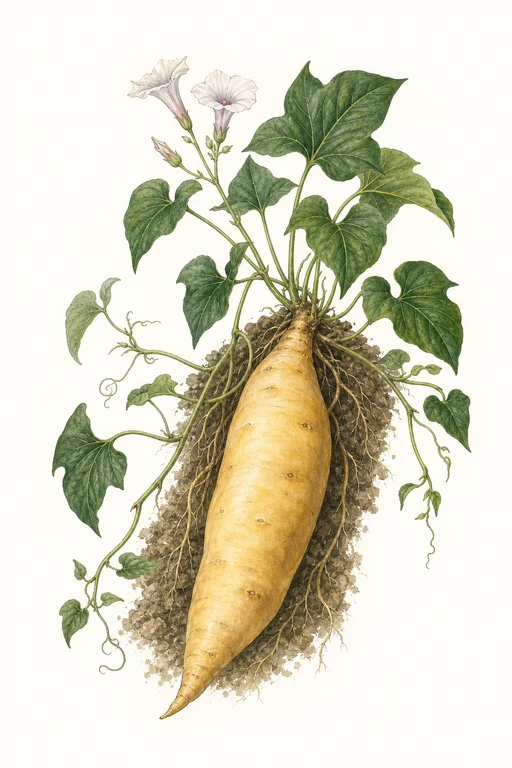
Warm, sunlit flesh is the hallmark of Japanese Giant—its golden-yellow tubers develop a velvety sweetness and a tender, creamy bite that feels almost luminous when roasted.
Expect substantial, elongated roots with a smooth skin and a rich, honeyed flavor profile that shines in hearty sides and velvety purées, as well as in thick slices for baking and roasting. A standout for gardeners who want showy harvests and a distinctive yellow color that turns every dish into a golden centerpiece.
Light: Full SunMaturity: 120 DaysHabit: Vine
Planting schedules and alerts are optimized for Columbus (Zone 6b).
Crop Dates
| Milestone | Date |
|---|---|
| Start Indoors | Direct Sow |
| Last Frost | Apr 25th |
| Transplant / Sow Outdoors | Jun 20th |
| Harvest Begins | Oct 18th |
| Harvest Ends | Oct 16th |
Crop Details
| Trait | Value |
|---|---|
| Days to Maturity | 120 |
| Sun Requirements | Full Sun |
| Growth Habit | Vine |
| Support Needed | None |
| Planting Depth | Normal |
| Germination Temp (°F) | 80 |
| Min Soil Temp (°F) | 65 |
| Min Night Temp (°F) | 55 |
| Harden Off (days) | 10 |
Culinary Notes

Chef's Note
Japanese Giant’s yellow flesh turns plush and luminous when heat-coaxed—roasting is where the natural sugars go from sweet to almost caramel. The texture stays creamy rather than starchy, so it purées like velvet and slices bake up custardy instead of dry.

Best Uses
- roasted wedges that crisp at the edges while staying creamy through the center
- silky purées (holdable, spoonable, not watery)
- thick slices for baking until custardy in the middle
- sweet-savory sheet-pan sides with a glossy glaze

Flavor Profile

Frequently Asked Questions
What pest or disease commonly affects Ipomoea batatas (Japanese Giant) and how do I control it?
How often should I water Japanese Giant during the main growing phase?
How can I tell when Japanese Giant sweet potatoes are ready to harvest?
Sowing Tips

Transplant Conditions
Wait until soil reaches 65°F and nights stay above 55°F before moving outdoors. Harden off for 10 days first.

Direct Sow Preferred
Sensitive roots — does not transplant well. If starting indoors, use biodegradable pots and disturb roots as little as possible when moving outdoors.
Expert Note

For “Japanese Giant” (a long-season tuber crop), direct-sow/plant tubers after frost with evenly moist soil and allow a full season to reach very large weights.