
Japanese Murasaki
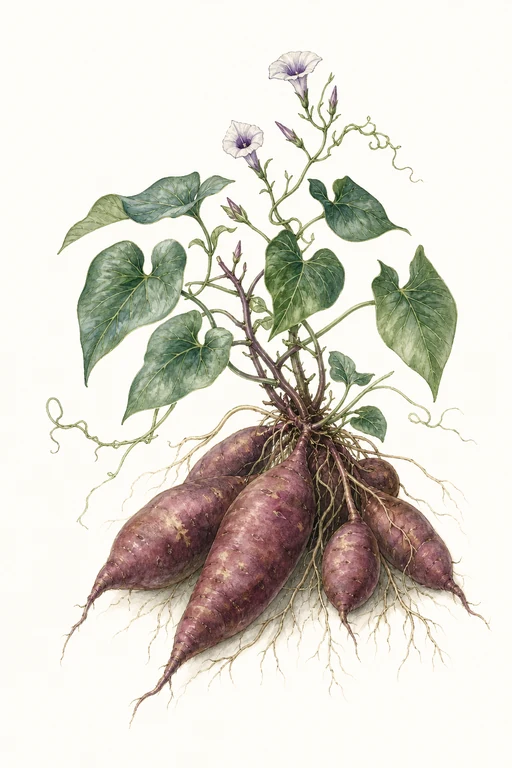
Velvety, richly sweet flesh with a luminous violet blush—Japanese Murasaki rewards the gardener with tubers that roast to a tender, creamy texture and develop a deep, caramel-kissed flavor.
The skins are beautifully mottled and the interior color turns especially vivid at maturity, making each harvest feel like a small treasure. Grow Japanese Murasaki for standout color in baked preparations and for naturally sweet purées, mashes, and vibrant pickled accents.
Light: Full SunMaturity: 90 DaysHabit: Vine
Planting schedules and alerts are optimized for Columbus (Zone 6b).
Crop Dates
| Milestone | Date |
|---|---|
| Start Indoors | Direct Sow |
| Last Frost | Apr 25th |
| Transplant / Sow Outdoors | Apr 25th |
| Harvest Begins | Jul 24th |
| Harvest Ends | Oct 16th |
Crop Details
| Trait | Value |
|---|---|
| Days to Maturity | 90 |
| Sun Requirements | Full Sun |
| Growth Habit | Vine |
| Support Needed | None |
| Planting Depth | Normal |
| Germination Temp (°F) | 80 |
| Min Soil Temp (°F) | 70 |
| Min Night Temp (°F) | 55 |
| Harden Off (days) | Not Required |
Culinary Notes

Chef's Note
Japanese Murasaki cooks up with a custardy, creamy interior and a sweet, caramel-leaning flavor that really shows in dry-heat—roasting and baking give it that nutty edge. Use it where you want the color and the velvety starch to coat every bite, then cut it with acid (lime or vinegar) to keep it from going cloying.

Best Uses
- roasted wedges that go caramel-brown at the edges
- mashes and purées for a silky, not-stringy spoonful
- baked pies or custards where the color turns jewel-bright
- quick pickles and bright relishes to sharpen the sweetness

Flavor Profile

Frequently Asked Questions
Japanese Murasaki (Ipomoea batatas): what pest or disease should I watch for, and what should I do if I see it?
How often should I water Japanese Murasaki while it’s actively growing to size the tuberous roots?
How can I tell when Japanese Murasaki is ready to harvest?
Sowing Tips

Transplant Conditions
Wait until soil reaches 70°F and nights stay above 55°F before moving outdoors.
Expert Note

Sweet potatoes are grown for warm-weather roots—start with slips (or warm sprout starts) and wait to plant until soils are consistently warm and nights stay above their comfort zone.