
Japanese Yam
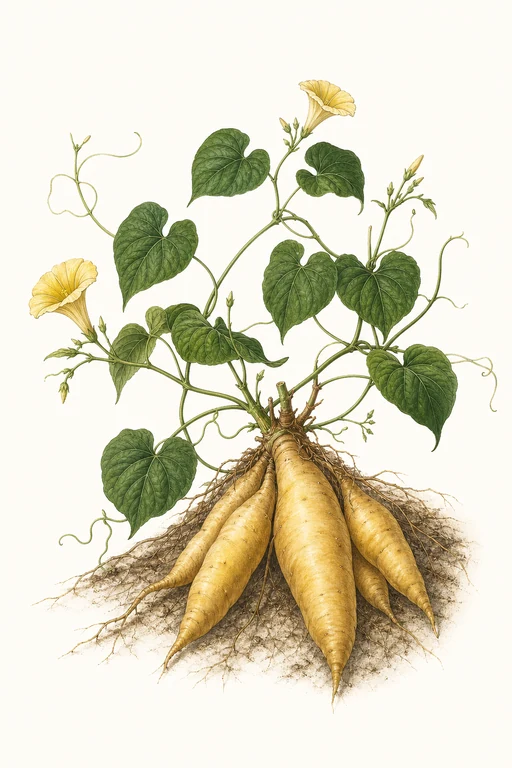
Sun-warmed sweetness blooms from the first bite—Japanese Yam’s golden-yellow flesh is richly aromatic, with a velvety, spoonable texture that turns tender and luminous as it matures.
This Yellow Sweet Potato forms substantial, well-shaped tubers with a smooth, earthy skin and a bright interior that holds its color beautifully for bold, comforting results. Grow Japanese Yam for a harvest that feels like a pantry treasure: naturally sweet, creamy in character, and ideal for roasting, mashing, and silky sauces, as well as for pickling where its mellow sweetness shines.
Light: Full SunMaturity: 100 DaysHabit: Vine
Planting schedules and alerts are optimized for Columbus (Zone 6b).
Crop Dates
| Milestone | Date |
|---|---|
| Start Indoors | Direct Sow |
| Last Frost | Apr 25th |
| Transplant / Sow Outdoors | May 9th |
| Harvest Begins | Aug 17th |
| Harvest Ends | Oct 16th |
Crop Details
| Trait | Value |
|---|---|
| Days to Maturity | 100 |
| Sun Requirements | Full Sun |
| Growth Habit | Vine |
| Support Needed | None |
| Planting Depth | Normal |
| Germination Temp (°F) | 75 |
| Min Soil Temp (°F) | 65 |
| Min Night Temp (°F) | 55 |
| Harden Off (days) | 7 |
Culinary Notes

Chef's Note
This yellow-fleshed Japanese yam cooks into a luminous, creamy mass with a naturally honeyed pull—perfect when you want sweetness that feels spoonably tender, not starchy or watery. It takes well to heat-driven caramelization (roast) and to emulsified silk (mash/soup), while citrus and spice keep it from going one-note.

Best Uses
- roasting wedges until the edges caramelize and the centers collapse for maximum sweetness
- mashing with butter/cream for a smooth, dense spoonful texture
- pureeing into a silky soup or sauce that clings instead of thinning out
- quick pickling or brining for mellow-sweet, tang-cut bites

Flavor Profile

Kitchen Pairings
Frequently Asked Questions
What’s a common pest or disease for Ipomoea batatas (Japanese yam) and how do I manage it?
How often should I water Japanese yam during active growth?
How can I tell when my Japanese yam (Ipomoea batatas) is ready to harvest?
Sowing Tips

Transplant Conditions
Wait until soil reaches 65°F and nights stay above 55°F before moving outdoors. Harden off for 7 days first.

Direct Sow Preferred
Sensitive roots — does not transplant well. If starting indoors, use biodegradable pots and disturb roots as little as possible when moving outdoors.
Expert Note

Japanese yam/sweet potato is grown from slips or vine cuttings after soil warms—use black plastic mulch or row cover if nights are still cool to prevent slow establishment.