
Jermor
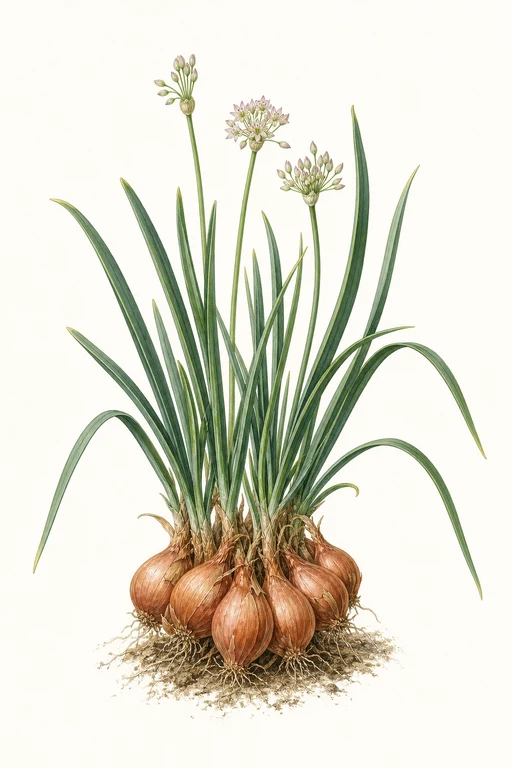
Aromatically sweet and richly savory, Jermor shallots bring a velvety depth to the table with bulbs that peel into neat, glossy segments.
At maturity, the skin turns a warm copper-brown while the flesh stays crisp and pale, offering a tender bite that softens beautifully in everyday preparations. Grow Jermor for reliable, uniform clumps and a dependable harvest that shines in sautés, sauces, and quick pickles alike.
Light: Full SunMaturity: 90 DaysHabit: Bulbing
Planting schedules and alerts are optimized for Columbus (Zone 6b).
Crop Dates
| Milestone | Date |
|---|---|
| Start Indoors | Direct Sow |
| Last Frost | Apr 25th |
| Transplant / Sow Outdoors | Apr 25th |
| Harvest Begins | Jul 24th |
| Harvest Ends | Oct 16th |
Crop Details
| Trait | Value |
|---|---|
| Days to Maturity | 90 |
| Sun Requirements | Full Sun |
| Growth Habit | Bulbing |
| Support Needed | None |
| Planting Depth | Normal |
| Germination Temp (°F) | 70 |
| Min Soil Temp (°F) | 45 |
| Min Night Temp (°F) | 35 |
| Harden Off (days) | Not Required |
Culinary Notes

Chef's Note
Jermor’s clean sweetness and fast-softening texture make it the kind of shallot you can treat aggressively—hot pan, quick reduction—without it collapsing into sharp onion funk. Peel it, slice it, and let it melt into butter, vinegar, or jus where its glossy segments turn tender but still distinct.

Best Uses
- finely chopped shallot sauté for butter sauces and pan reductions
- quick pickles where it stays snappy with gentle bite
- shallow-caramelized shallots for jammy edges without turning bitter
- blended into silky dressings and vinaigrettes for a smooth, rounded finish

Flavor Profile

Kitchen Pairings
Frequently Asked Questions
What pest or disease commonly affects Allium cepa var. aggregatum (Dutch Yellow shallot) and how can I control it?
How often should I water Dutch Yellow shallots (Allium cepa var. aggregatum) during the main growing phase?
How do I tell when my Dutch Yellow shallots (Allium cepa var. aggregatum) are ready to harvest?
Sowing Tips

Transplant Conditions
Wait until soil reaches 45°F and nights stay above 35°F before moving outdoors.
Expert Note

Shallots establish best when planted with sets/bulbs soon after soil warms, then watered consistently while the bulbs size but reduced irrigation once tops start to yellow for better curing.