
Jewel Of Africa
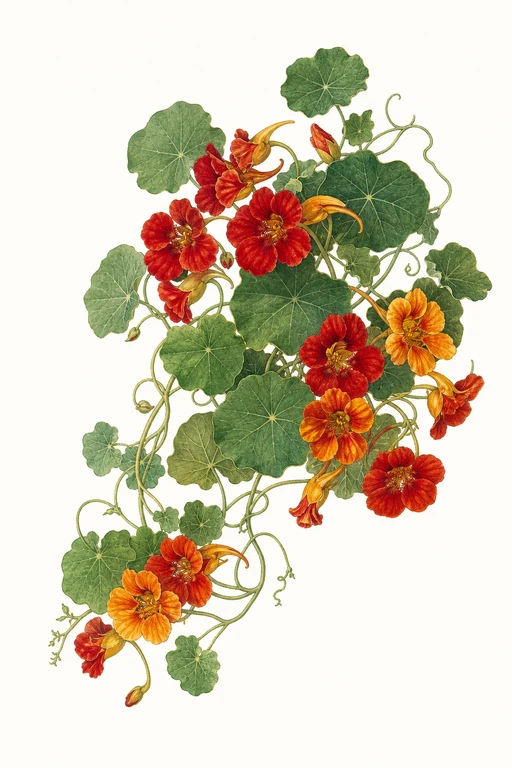
A living jewel in the garden—Jewel Of Africa bursts with velvety, saturated blooms that glow like warm garnet against lush foliage, with a peppery, bright bite that livens every plate.
The flowers and tender leaves offer a crisp, succulent texture and a lively flavor profile prized for fresh garnishes and vibrant color in salads, as well as for quick pickling and decorative finishing. Fast to establish and quick to flower in about 50 days, this flowering vine turns summer into a nonstop cascade of edible blossoms.
Light: Full SunMaturity: 50 DaysHabit: Vine
Crop Dates : 12b
| Milestone | Date |
|---|---|
| Start Indoors | — |
| Climate | Frost-Free Climate |
| Transplant / Sow Outdoors | Oct 1st |
| Harvest Begins | Nov 20th |
| Harvest Ends | Feb 28th |
Crop Details
| Trait | Value |
|---|---|
| Days to Maturity | 50 |
| Sun Requirements | Full Sun |
| Growth Habit | Vine |
| Support Needed | Trellis |
| Planting Depth | Normal |
| Germination Temp (°F) | 70 |
| Min Soil Temp (°F) | 55 |
| Min Night Temp (°F) | 40 |
| Harden Off (days) | Not Required |
Culinary Notes

Chef's Note
Nasturtium’s peppery zing and succulent crunch make these blossoms more than “pretty”—they behave like edible confetti with real bite. Use them at the last moment or in quick pickles so the texture stays snappy instead of wilting into syrupy greens.

Best Uses
- scatter blossoms over salads right at the end so they stay crisp
- quick-pickle buds and leaves for poppy briny crunch
- tuck flowers onto charcuterie boards and mezze for a peppery garnish
- stir leaves into warm grain bowls at the last second for a fresh, spicy lift

Flavor Profile

Kitchen Pairings
Frequently Asked Questions
What’s a common disease problem for Tropaeolum majus (Jewel of Africa), and how can I prevent it?
How often should I water Tropaeolum majus during its main growing phase?
How do I tell when Tropaeolum majus (Jewel of Africa) is ready to harvest?
Sowing Tips

Transplant Conditions
Wait until soil reaches 55°F and nights stay above 40°F before moving outdoors.
Expert Note

For best performance, sow directly after frost when the soil has warmed and keep plants on the drier side to encourage flowering over foliage.