
Kabocha
Sink your spoon into Kabocha’s velvety, deep-orange flesh—sweet, nutty, and richly aromatic with a smooth, custard-like texture that feels made for cozy winter tables.
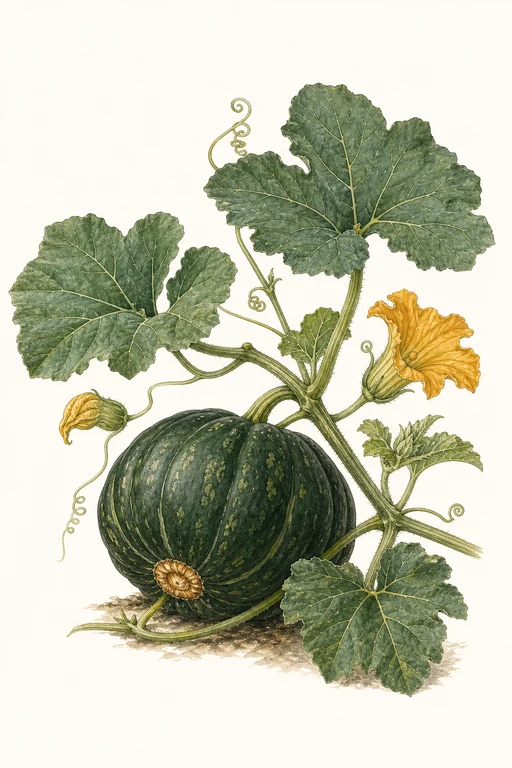
This 90-day winter squash develops a compact, sturdy form and a distinctive, dark green shell that turns even more handsome as it cures. Grow Kabocha for roasting and steaming, or for silky purées and hearty soups, where its naturally sweet flavor shines and its flesh stays beautifully tender.
Light: Full SunMaturity: 90 DaysHabit: Vine
Location not set yet
Location not set yet
Enter your ZIP for local crop dates
Kabocha Planting Dates by USDA Zone
Estimated US hardiness-zone windows for sow, transplant, and harvest. Enter a US ZIP above for exact local dates, or open a zone below.
| Zone | Start Indoors | Sow / Transplant | Harvest |
|---|---|---|---|
| Zone 1a | Protected Environment Only | ||
| Zone 1b | Protected Environment Only | ||
| Zone 2a | May 25th | Jun 8th | Sep 6th – Aug 29th |
| Zone 2b | May 15th | May 29th | Aug 27th – Aug 25th |
| Zone 3a | May 15th | May 29th | Aug 27th – Sep 1st |
| Zone 3b | May 19th | Jun 2nd | Aug 31st – Sep 21st |
| Zone 4a | May 15th | May 29th | Aug 27th – Sep 24th |
| Zone 4b | May 13th | May 27th | Aug 25th – Sep 27th |
| Zone 5a | May 8th | May 22nd | Aug 20th – Sep 30th |
| Zone 5b | May 4th | May 18th | Aug 16th – Oct 5th |
| Zone 6a | May 1st | May 15th | Aug 13th – Oct 10th |
| Zone 6b | Apr 25th | May 9th | Aug 7th – Oct 16th |
| Zone 7a | Apr 20th | May 4th | Aug 2nd – Oct 20th |
| Zone 7b | Apr 10th | Apr 24th | Jul 23rd – Oct 28th |
| Zone 8a | Apr 1st | Apr 15th | Jul 14th – Nov 5th |
| Zone 8b | Mar 23rd | Apr 6th | Jul 5th – Nov 12th |
| Zone 9a | Mar 6th | Mar 20th | Jun 18th – Nov 26th |
| Zone 9b | Feb 9th | Feb 23rd | May 24th – Dec 9th |
| Zone 10a | Continuous Production | ||
| Zone 10b | Continuous Production | ||
| Zone 11a | Continuous Production | ||
| Zone 11b | Continuous Production | ||
| Zone 12a | Continuous Production | ||
| Zone 12b | Continuous Production | ||
| Zone 13a | Continuous Production | ||
| Zone 13b | Continuous Production | ||
Crop Details
| Trait | Value |
|---|---|
| Days to Maturity | 90 |
| Sun Requirements | Full Sun |
| Growth Habit | Vine |
| Support Needed | Trellis |
| Planting Depth | Normal |
| Germination Temp (°F) | 75 |
| Min Soil Temp (°F) | 65 |
| Min Night Temp (°F) | 55 |
| Harden Off (days) | 10 |
Culinary Notes

Chef's Note
Kabocha’s deep-orange flesh turns silky instead of stringy, so it purées like custard and gives soups a spoon-coating thickness. When roasted, it leans nutty and caramel-sweet, making it crave-worthy with browned fats and sharp aromatics like ginger and black pepper.

Best Uses
- roast wedges until the edges turn bronzed and the interior becomes pudding-soft
- steam and mash with a knob of butter for a smooth, low-effort side
- silky purée for soups that need body without added cream
- thickening agent for chowders and vegetarian stews—adds sweetness, not starchy heft

Flavor Profile

Kitchen Pairings
Frequently Asked Questions
What pest or disease is most likely on Cucurbita maxima (kabocha), and how do I manage it?
How often should I water kabocha (Cucurbita maxima) during the main growing phase?
How can I tell when my kabocha (Cucurbita maxima) is ready to harvest?
Sowing Tips

Transplant Conditions
Wait until soil reaches 65°F and nights stay above 55°F before moving outdoors. Harden off for 10 days first.

Direct Sow Preferred
Sensitive roots — does not transplant well. If starting indoors, use biodegradable pots and disturb roots as little as possible when moving outdoors.
Expert Note

For the best kabocha harvest, start with warm soil and give each vine ample space—this crop sets fruit more reliably when soil stays consistently warm.