
Korean Mu
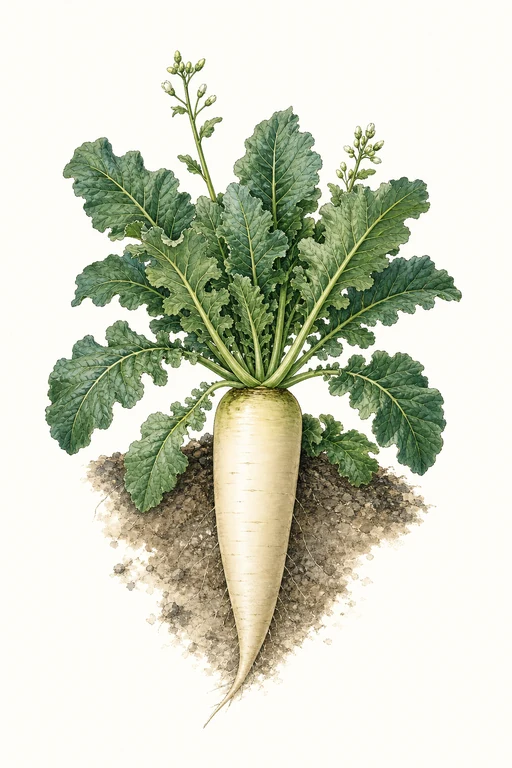
Crisp at first bite, Korean Mu forms a long, elegant winter radish with a clean, bright bite and a pleasantly mild heat that lingers like fresh pepper on the palate.
The flesh stays firm and juicy with a fine, even grain—ideal for slicing into tender rounds that hold their shape, and for bold flavor-building preparations where its sweetness can come forward. Grow Korean Mu for a dependable 55-day harvest that rewards cool-season patience with a striking, market-ready root.
Light: Full SunMaturity: 55 DaysHabit: Taproot
Crop Dates : 5b
| Milestone | Date |
|---|---|
| Start Indoors | Direct Sow |
| Last Frost | May 4th |
| Transplant / Sow Outdoors | May 4th |
| Harvest Begins | Jun 28th |
| Harvest Ends | Oct 5th |
Crop Details
| Trait | Value |
|---|---|
| Days to Maturity | 55 |
| Sun Requirements | Full Sun |
| Growth Habit | Taproot |
| Support Needed | None |
| Planting Depth | Normal |
| Germination Temp (°F) | 55 |
| Min Soil Temp (°F) | 45 |
| Min Night Temp (°F) | 28 |
| Harden Off (days) | Not Required |
Culinary Notes

Chef's Note
Korean Mu hits with a crisp, peppery bite that stays photogenic in slices—no grainy breakage, no mushy surrender. Use it raw for snap under heavy sauces, or cook just to coax sweetness while preserving that juicy center.

Best Uses
- thin rounds or batons for kimchi-style crunch and fast pickling
- grated radish for quick dipping sauces and dumpling fillings
- wilt/sauté in a hot pan just long enough to soften edges while keeping the interior juicy
- roasted wedges for caramelized sweetness with still-not-mushy structure

Flavor Profile

Kitchen Pairings
Frequently Asked Questions
What pest or disease most often affects winter radish (Raphanus sativus), and how do I treat it?
How often should I water Korean mu (winter radish, Raphanus sativus) during the main growing phase?
How can I tell when Korean mu (Raphanus sativus) is ready to harvest?
Sowing Tips

Transplant Conditions
Wait until soil reaches 45°F and nights stay above 28°F before moving outdoors.
Expert Note

For Korean Mu (winter radish), sow directly for best taproot formation and keep soil consistently moist to maintain sweet, juicy texture.