
Korean Purple
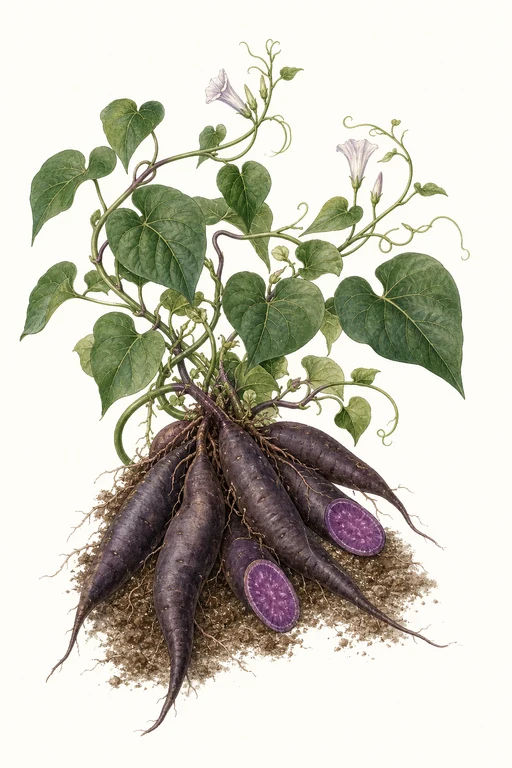
Sink your spoon into Korean Purple’s richly hued flesh—an aromatic, violet-deep interior that turns luxuriously tender with heat.
The roots develop a smooth, well-shaped form with a vivid purple core and a subtly sweet, earthy fragrance that makes it a standout for bold color in every dish. Grow this warm-season favorite for a harvest that’s as striking on the counter as it is satisfying in roasted preparations and vivid purées.
Light: Full SunMaturity: 85 DaysHabit: Vine
Planting schedules and alerts are optimized for Columbus (Zone 6b).
Crop Dates
| Milestone | Date |
|---|---|
| Start Indoors | Direct Sow |
| Last Frost | Apr 25th |
| Transplant / Sow Outdoors | Jun 20th |
| Harvest Begins | Sep 13th |
| Harvest Ends | Oct 16th |
Crop Details
| Trait | Value |
|---|---|
| Days to Maturity | 85 |
| Sun Requirements | Full Sun |
| Growth Habit | Vine |
| Support Needed | None |
| Planting Depth | Normal |
| Germination Temp (°F) | 80 |
| Min Soil Temp (°F) | 60 |
| Min Night Temp (°F) | 55 |
| Harden Off (days) | Not Required |
Culinary Notes

Chef's Note
Korean Purple carries a floral-aromatic sweetness that turns almost custardy when roasted or steamed—its purple core stays lush instead of going dull. It’s the kind of sweet potato you cook down into a silky purée or caramelize on a hot sheet pan, where the edges get nutty while the center stays spoon-tender.

Best Uses
- roasted wedges with crisp edges and creamy centers
- silky purple purée for bowls or side plates
- baked goods where color matters (muffins, pies, cakes)
- thick soups or chowders that benefit from natural sweetness and color

Flavor Profile

Kitchen Pairings
Frequently Asked Questions
What pest or disease commonly affects eggplant (Solanum melongena) and how can I treat it?
How often should I water eggplant during the main growing phase?
How do I know when Korean Purple eggplant is ready to harvest?
Sowing Tips

Transplant Conditions
Wait until soil reaches 60°F and nights stay above 55°F before moving outdoors.
Expert Note

Start seeds early for a fast start, but only transplant once soil is reliably warm (60°F+) and nights are staying above ~50°F to prevent stunting.