
Korean Radish (Mu)
Crisp and luminous from the first bite—Korean Radish (Mu) develops a clean, bright bite with a gently sweet, watery snap.
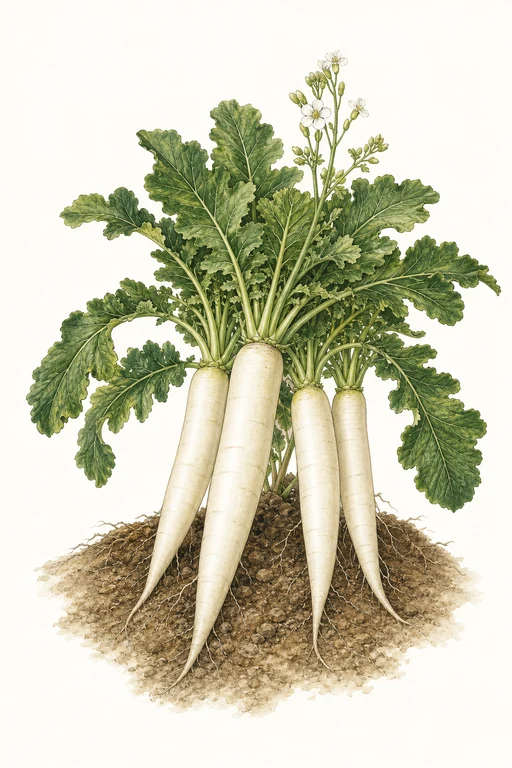
At maturity (about 50 days), the roots form smooth, elongated cylinders with a pale, ivory finish and a tender, fine-grained texture that stays refreshingly crisp. Grow Mu for fresh slicing and quick pickling, where its mild character shines in bright, tangy preparations.
Light: Full SunMaturity: 50 DaysHabit: Taproot
Crop Dates : 8a
| Milestone | Date |
|---|---|
| Start Indoors | Direct Sow |
| Last Frost | Apr 1st |
| Transplant / Sow Outdoors | Apr 1st |
| Harvest Begins | May 21st |
| Harvest Ends | Nov 5th |
Crop Details
| Trait | Value |
|---|---|
| Days to Maturity | 50 |
| Sun Requirements | Full Sun |
| Growth Habit | Taproot |
| Support Needed | None |
| Planting Depth | Normal |
| Germination Temp (°F) | 70 |
| Min Soil Temp (°F) | 40 |
| Min Night Temp (°F) | 28 |
| Harden Off (days) | Not Required |
Culinary Notes

Chef's Note
Mu’s mild heat and watery crispness make it a go-to for pickles that stay glassy, not soft. Slice it paper-thin or pickle it briefly—its fine-grained snap turns soy-vinegar and sesame into something you can’t stop eating.

Best Uses
- quick pickling for crunchy banchan-style slices
- thin fresh slicing for lettuce-like crunch in salads
- grated radish for quick soy-vinegar dip or condiment
- stir-fry additions where it stays snappy rather than melting

Flavor Profile

Kitchen Pairings
Frequently Asked Questions
What are common pests or diseases for Raphanus sativus (Korean radish), and how can I control them?
How often should I water Korean radish during the main growing phase (around weeks 2–6)?
How do I tell when Korean radish (Raphanus sativus) is ready to harvest?
Sowing Tips

Transplant Conditions
Wait until soil reaches 40°F and nights stay above 28°F before moving outdoors.
Expert Note

Direct sow Korean radish in consistently moist soil and harvest promptly for best crispness—quality drops if roots get oversized.