
Krishna Tulsi
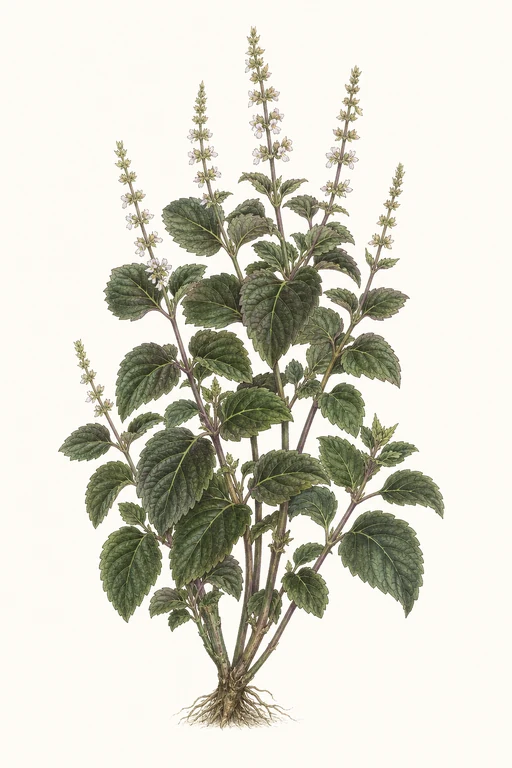
Fragrant as a warm breeze over fresh green leaves, Krishna Tulsi fills the garden with a deep, peppery-cool aroma and a gently sweet, herbal lift.
Its tender, upright foliage forms a lush canopy of richly textured leaves that hold their character beautifully in aromatic infusions and traditional medicinal preparations. Ideal for warm-season growing, Krishna Tulsi rewards attentive gardeners with steady, flavorful harvests from about 60 days onward.
Light: Full SunMaturity: 60 DaysHabit: Upright
Planting schedules and alerts are optimized for Columbus (Zone 6b).
Crop Dates
| Milestone | Date |
|---|---|
| Start Indoors | Mar 14th |
| Last Frost | Apr 25th |
| Transplant / Sow Outdoors | Jun 13th |
| Harvest Begins | Aug 12th |
| Harvest Ends | Oct 16th |
Crop Details
| Trait | Value |
|---|---|
| Days to Maturity | 60 |
| Sun Requirements | Full Sun |
| Growth Habit | Upright |
| Support Needed | None |
| Planting Depth | Normal |
| Germination Temp (°F) | 70 |
| Min Soil Temp (°F) | 60 |
| Min Night Temp (°F) | 50 |
| Harden Off (days) | 10 |
Culinary Notes

Chef's Note
Krishna Tulsi carries a peppery-cool perfume that stays bright in hot water, so it earns its keep in short-steep teas and aromatic infusions. Its tender sweetness and herbal snap make it a standout finisher—add it at the end so the peppery top-notes don’t burn off.

Best Uses
- hot infusions for a fragrant, tea-like steep
- torn-leaf infusions in syrups or simple syrups
- finish soups, beans, and rice with quick wilting
- use in chutney or yogurt sauces where you want a peppery-herb lift

Flavor Profile

Kitchen Pairings
Frequently Asked Questions
What pest or disease commonly affects Ocimum tenuiflorum (Krishna Tulsi), and how can I control it?
How often should I water Krishna Tulsi during the main growing phase?
How do I tell when Krishna Tulsi is ready to harvest?
Sowing Tips

Transplant Conditions
Wait until soil reaches 60°F and nights stay above 50°F before moving outdoors. Harden off for 10 days first.
Expert Note

Start early for fuller, bushier growth—keep seedlings warm and don’t transplant until nights are consistently mild to prevent stunting.