
Kuroda Long
Sweetly earthy and richly aromatic, Kuroda Long carrots bring a silky, tender crunch with a fine-grained bite that stays pleasantly sweet from garden to table.
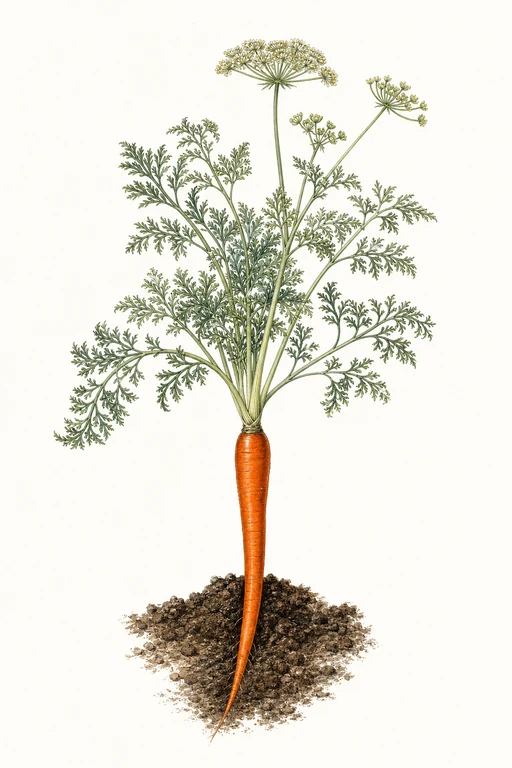
Their long, tapered roots develop a deep orange core and smooth skin, making them a favorite for roasting, fresh snacking, and vibrant sauces where color and flavor matter most. Grow Kuroda Long for an elegant harvest that feels as good to pull as it tastes—straight, slender, and beautifully uniform at maturity.
Light: Full SunMaturity: 70 DaysHabit: Taproot
Crop Dates : 2a
| Milestone | Date |
|---|---|
| Start Indoors | Direct Sow |
| Last Frost | May 25th |
| Transplant / Sow Outdoors | May 25th |
| Harvest Begins | Aug 3rd |
| Harvest Ends | Aug 29th |
Crop Details
| Trait | Value |
|---|---|
| Days to Maturity | 70 |
| Sun Requirements | Full Sun |
| Growth Habit | Taproot |
| Support Needed | None |
| Planting Depth | Surface |
| Germination Temp (°F) | 55 |
| Min Soil Temp (°F) | 45 |
| Min Night Temp (°F) | 28 |
| Harden Off (days) | Not Required |
Culinary Notes

Chef's Note
Kuroda Long leans aromatic and sweet with a fine-grained crunch, so it doesn’t turn mushy or starchy as quickly as chunkier carrots. Roast or purée it and it stays silky, carrying bright partners like ginger and orange without tasting flat.

Best Uses
- hot-roast whole or coin-sliced for caramelized edges
- raw snacking sticks with minimal salt (they stay crisp and sweet)
- glossy carrot purée or purée-based soup—smooth, not fibrous

Flavor Profile

Kitchen Pairings
Frequently Asked Questions
What’s the most common carrot (Daucus carota var. sativus) pest or disease issue, and how do I treat it?
How often should I water carrots during the main growing phase to get straight roots?
How can I tell when Kuroda Long carrots are ready to harvest?
Sowing Tips

Transplant Conditions
Wait until soil reaches 45°F and nights stay above 28°F before moving outdoors.
Expert Note

Sow shallow, keep the surface evenly moist until emergence, and thin early to prevent misshapen roots.