
Leonardo
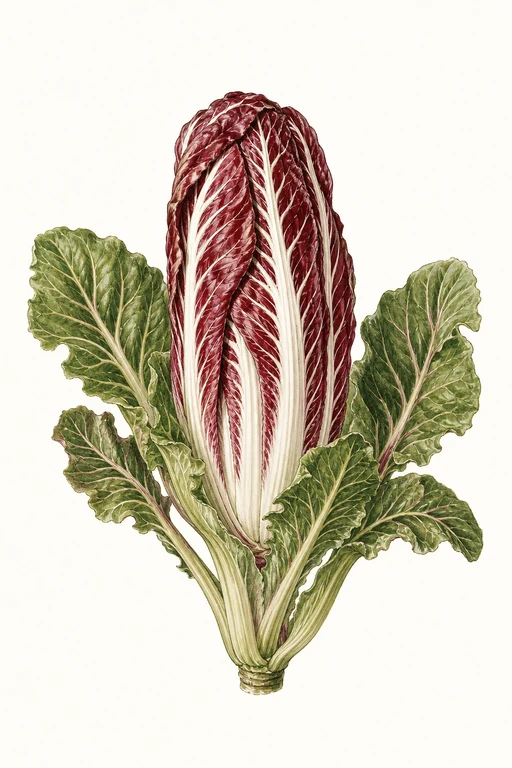
Crisp and vivid from the first bite of color—Leonardo radicchio forms tight, upright heads that deepen to a jewel-toned red with creamy white ribs.
The leaves are pleasantly bitter yet beautifully balanced, with a snappy crunch and a gently tender bite that holds up beautifully in cool-weather dishes. Grow Leonardo for bold salads, roasted leaf platters, and striking additions to sauces and pickles where its color and texture shine.
Light: Full SunMaturity: 60 DaysHabit: Rosette
Planting schedules and alerts are optimized for Columbus (Zone 6b).
Crop Dates
| Milestone | Date |
|---|---|
| Start Indoors | Mar 28th |
| Last Frost | Apr 25th |
| Transplant / Sow Outdoors | Apr 25th |
| Harvest Begins | Jun 24th |
| Harvest Ends | Oct 16th |
Crop Details
| Trait | Value |
|---|---|
| Days to Maturity | 60 |
| Sun Requirements | Full Sun |
| Growth Habit | Rosette |
| Support Needed | None |
| Planting Depth | Normal |
| Germination Temp (°F) | 70 |
| Min Soil Temp (°F) | 40 |
| Min Night Temp (°F) | 32 |
| Harden Off (days) | 6 |
Culinary Notes

Chef's Note
Leonardo radicchio brings tight, upright crunch plus a balanced bitterness that doesn’t flatten when you cook it—those creamy ribs help the leaves stay composed. Use it for high-contrast plates: a sharp acid (balsamic or citrus) and salty cheese make the bitterness taste intentional, not harsh.

Best Uses
- shaved radicchio salads dressed lightly so the crunch stays loud
- roasted wedges (oiled, high-heat) for caramelized edges and softer centers
- hot-and-cold braises where the leaves wilt without turning to mush
- quick pickles or vinegar slaws to keep the bitterness bright instead of dull

Flavor Profile

Kitchen Pairings
Frequently Asked Questions
What pest or disease commonly affects Cichorium intybus (Leonardo), and how can I manage it?
How often should I water Cichorium intybus during active growth, and what soil moisture level should I maintain?
How do I know when Leonardo (Cichorium intybus) is ready to harvest?
Sowing Tips

Transplant Conditions
Wait until soil reaches 40°F and nights stay above 32°F before moving outdoors. Harden off for 6 days first.
Expert Note

For this early Chioggia-type radicchio, keep the soil consistently moist and transplant into cool weather so heads form tightly before warm spells.