
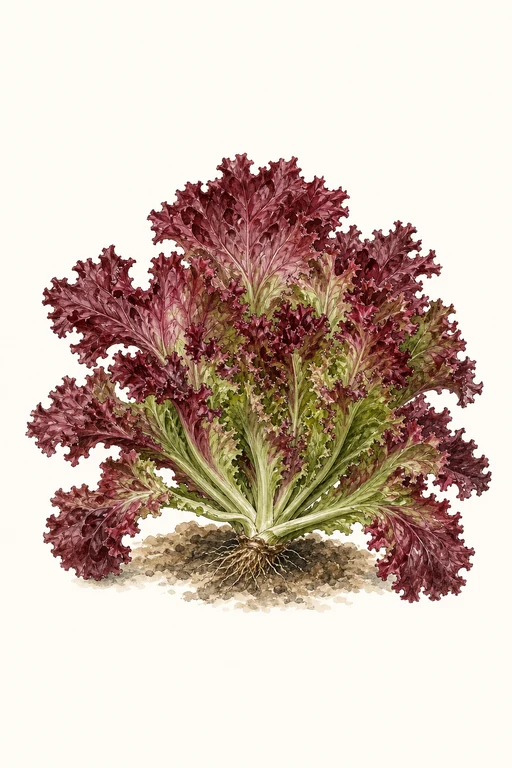
Lollo Di Vino
Velvety, wine-kissed leaves unfurl in a loose rosette, their deep burgundy tones edged with a tender, frilled green—like velvet ribbon caught in a cool-season breeze.
Lollo Di Vino delivers a pleasantly crisp bite with a gentle, leafy sweetness, making it a standout for fresh salads and bright garnishes. Grow it for its heirloom charm and its dramatic color that deepens as the weather cools, reaching peak texture in about 45 days.
Light: Part SunMaturity: 45 DaysHabit: Rosette
Crop Dates : 2b
| Milestone | Date |
|---|---|
| Start Indoors | Apr 17th |
| Last Frost | May 15th |
| Transplant / Sow Outdoors | May 15th |
| Harvest Begins | Jun 29th |
| Harvest Ends | Aug 25th |
Crop Details
| Trait | Value |
|---|---|
| Days to Maturity | 45 |
| Sun Requirements | Part Sun |
| Growth Habit | Rosette |
| Support Needed | None |
| Planting Depth | Surface |
| Germination Temp (°F) | 70 |
| Min Soil Temp (°F) | 40 |
| Min Night Temp (°F) | 35 |
| Harden Off (days) | 6 |
Culinary Notes

Chef's Note
Lollo Di Vino’s frilly, tender-crisp texture holds up better than many delicate lettuces, so it stays snappy instead of collapsing. Its faint bitterness and wine-kissed cool finish make it crave bright acid and clean fats—think lemony vinaigrette or a slick of olive oil and Parm.

Best Uses
- tossed salads where you want leaves to stay crisp under vinaigrette
- as a color-forward bed for warm proteins and pan sauces
- layered as a base for citrusy dressings and shaved-veg salads
- wilting-lightly in quick sautés where frill texture can still bite

Flavor Profile

Kitchen Pairings
Frequently Asked Questions
What pest or disease is most likely on Lactuca sativa (Lollo di Vino), and how can I prevent and treat it?
How often should I water Lollo di Vino during its main growing phase to keep heads from getting bitter or stressed?
How do I tell when Lollo di Vino is ready to harvest?
Sowing Tips

Transplant Conditions
Wait until soil reaches 40°F and nights stay above 35°F before moving outdoors. Harden off for 6 days first.
Expert Note

Keep temperatures cool and harvest early (before heat triggers bitterness and bolting).