
Long Island Cheese
Sink your spoon into Long Island Cheese and savor its rich, custardy sweetness—an inviting, warm-golden flesh that turns silky and deeply fragrant when fully ripened.
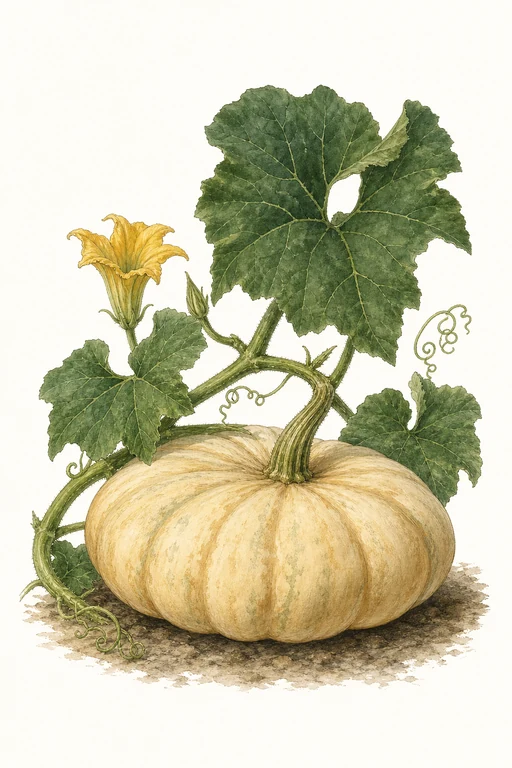
The fruits are famously flattened and generously sized, with a pale, creamy rind that hints at its tender interior, offering a smooth, velvety texture prized for classic pie-style preparations. Grow this 95-day Pie Pumpkin for a showpiece harvest that feels as comforting as it tastes, with a dependable, home-garden rhythm from vine to table.
Light: Full SunMaturity: 95 DaysHabit: Vine
Crop Dates : 2a
| Milestone | Date |
|---|---|
| Start Indoors | May 11th |
| Last Frost | May 25th |
| Transplant / Sow Outdoors | May 25th |
| Harvest Begins | Aug 28th |
| Harvest Ends | Aug 29th |
Crop Details
| Trait | Value |
|---|---|
| Days to Maturity | 95 |
| Sun Requirements | Full Sun |
| Growth Habit | Vine |
| Support Needed | Trellis |
| Planting Depth | Normal |
| Germination Temp (°F) | 70 |
| Min Soil Temp (°F) | 65 |
| Min Night Temp (°F) | 55 |
| Harden Off (days) | 10 |
Culinary Notes

Chef's Note
Long Island Cheese cooks down into a notably smooth, custard-like purée that clings to a crust instead of turning watery. Its fully ripened, warm-golden fragrance makes it ideal for heavily spiced, dairy-rich preparations where you want a thick, spoonable set.

Best Uses
- classic pumpkin pie filling (baked until set and softly custarded)
- roasted pumpkin purée for silky soups and velouté-style bases
- pan-roasted wedges that caramelize at the edges, then mash into smooth sides
- spoonable pumpkin custard or crème brûlée–style dessert filling

Flavor Profile

Kitchen Pairings
Frequently Asked Questions
What pests or diseases commonly hit Cucurbita moschata (Long Island Cheese squash), and how can I prevent or treat them?
How often should I water Long Island Cheese squash during the main growing phase?
How do I tell when Long Island Cheese squash is ready to harvest?
Sowing Tips

Transplant Conditions
Wait until soil reaches 65°F and nights stay above 55°F before moving outdoors. Harden off for 10 days first.

Direct Sow Preferred
Sensitive roots — does not transplant well. If starting indoors, use biodegradable pots and disturb roots as little as possible when moving outdoors.
Expert Note

Start or transplant only when nights are reliably warm and use wide spacing (vines) so this heirloom cheese-shaped squash can fully develop.