
Mallowman
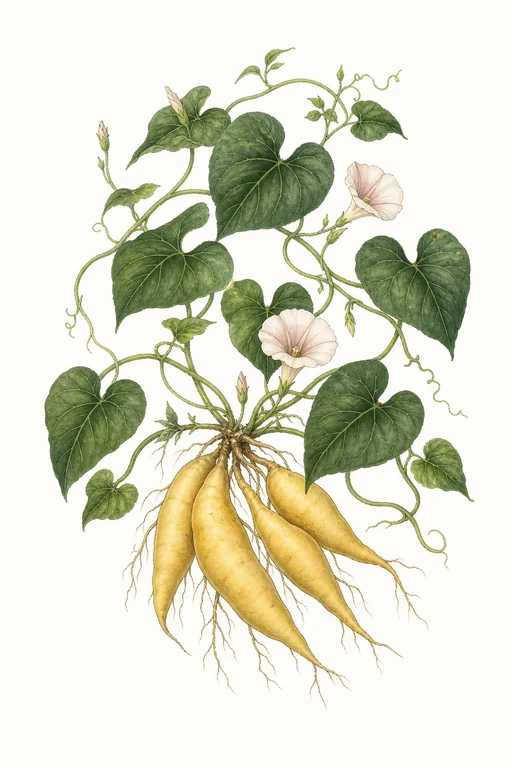
Sun-warmed sweetness pours from Mallowman’s golden tubers, with a mellow, honeyed flavor that feels velvety rather than starchy.
At maturity (about 90 days), the roots develop a smooth, warm butter-yellow interior and a tender, fine-grained texture that roasts to a caramel-kissed depth and shines in mash, purée, and comforting casseroles. Grow Mallowman for a radiant harvest that’s as beautiful on the counter as it is satisfying on the plate.
Light: Full SunMaturity: 90 DaysHabit: Vine
Planting schedules and alerts are optimized for Columbus (Zone 6b).
Crop Dates
| Milestone | Date |
|---|---|
| Start Indoors | Feb 28th |
| Last Frost | Apr 25th |
| Transplant / Sow Outdoors | Apr 25th |
| Harvest Begins | Jul 24th |
| Harvest Ends | Oct 16th |
Crop Details
| Trait | Value |
|---|---|
| Days to Maturity | 90 |
| Sun Requirements | Full Sun |
| Growth Habit | Vine |
| Support Needed | None |
| Planting Depth | Normal |
| Germination Temp (°F) | 80 |
| Min Soil Temp (°F) | 65 |
| Min Night Temp (°F) | 55 |
| Harden Off (days) | 7 |
Culinary Notes

Chef's Note
Mallowman’s golden flesh stays fine-grained and luxuriously soft, so it roasts into a caramel-kissed center instead of tasting dry or merely starchy. It’s built for caramelization—think browned butter, warming spice, and a little citrus lift to keep the sweetness bright.

Best Uses
- hot-sheet roasting until edges caramelize for spoonable, soft interiors
- silky mash or purée (it smooths without going gluey)
- casseroles and gratins where it holds a creamy sliceable body
- gently spiced pies or turnovers where the sweetness can stand up to cinnamon

Flavor Profile

Frequently Asked Questions
What pest or disease is most likely to affect Ipomoea batatas (sweet potato) and how do I manage it?
How often should I water Ipomoea batatas during the main growing phase?
How can I tell when Ipomoea batatas is ready to harvest?
Sowing Tips

Transplant Conditions
Wait until soil reaches 65°F and nights stay above 55°F before moving outdoors. Harden off for 7 days first.
Expert Note

I can’t produce reliable USDA-zone offsets for “Mallowman” because it isn’t a standard/identifiable crop name in horticultural references—please share the botanical family (or the variety’s scientific name / seed company listing) so I can set correct sow vs. transplant timing and heat/cold requirements.