
Margarita
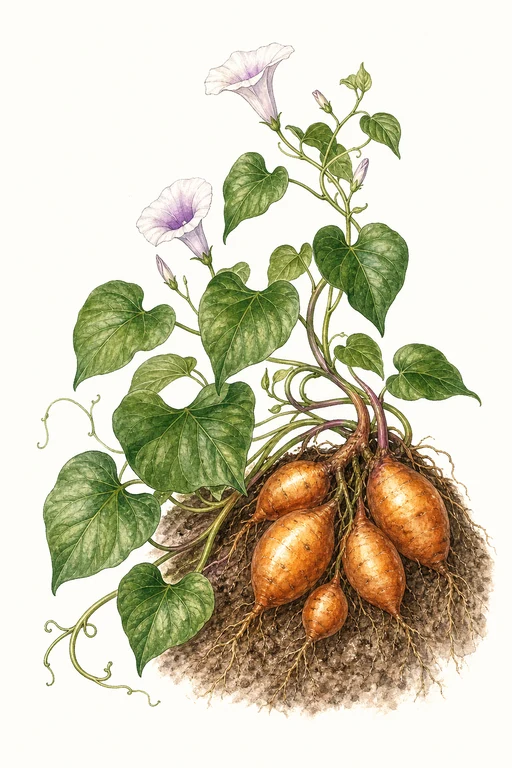
Velvety, sun-warmed sweetness meets a jewel-toned ornamental presence in Margarita sweet potato—its tubers develop with a luminous, coppery-gold glow and a softly firm, creamy interior.
The flesh is rich and smooth, ideal for roasting and mashing, and it also shines in silky sauces and gently sweetened preparations. Grow it for the season’s long, trailing beauty and harvest its distinctive, showpiece roots at about 90 days.
Light: Full SunMaturity: 90 DaysHabit: Vine
Planting schedules and alerts are optimized for Columbus (Zone 6b).
Crop Dates
| Milestone | Date |
|---|---|
| Start Indoors | Direct Sow |
| Last Frost | Apr 25th |
| Transplant / Sow Outdoors | May 9th |
| Harvest Begins | Aug 7th |
| Harvest Ends | Oct 16th |
Crop Details
| Trait | Value |
|---|---|
| Days to Maturity | 90 |
| Sun Requirements | Full Sun |
| Growth Habit | Vine |
| Support Needed | None |
| Planting Depth | Normal |
| Germination Temp (°F) | 75 |
| Min Soil Temp (°F) | 70 |
| Min Night Temp (°F) | 55 |
| Harden Off (days) | 7 |
Culinary Notes

Chef's Note
Margarita sweet potato is built for high-heat transformation: the coppery-gold tuber roasts into creamy, cohesive spoonfuls with caramelized edges instead of drying out. When you balance the sweetness with lime, pepper, and spice heat, it tastes almost candied—without going dessert-flat.

Best Uses
- hot oven roasting where it caramelizes at the edges
- mashing for a silkier, less stringy texture than many orange types
- silky purées for soups or chowders
- roasted wedges tossed with brown butter and a punch of citrus

Flavor Profile

Frequently Asked Questions
What pest or disease commonly affects Ipomoea batatas (sweet potato) and how do I control it in a home garden?
How often should I water Ipomoea batatas during peak growth, and what soil moisture should I aim for?
How can I tell when my Ipomoea batatas is ready to harvest?
Sowing Tips

Transplant Conditions
Wait until soil reaches 70°F and nights stay above 55°F before moving outdoors. Harden off for 7 days first.

Direct Sow Preferred
Sensitive roots — does not transplant well. If starting indoors, use biodegradable pots and disturb roots as little as possible when moving outdoors.
Expert Note

For ornamental and edible tubers, grow sweet potato from slips planted only after warm weather so the soil stays reliably warm.