
Marion
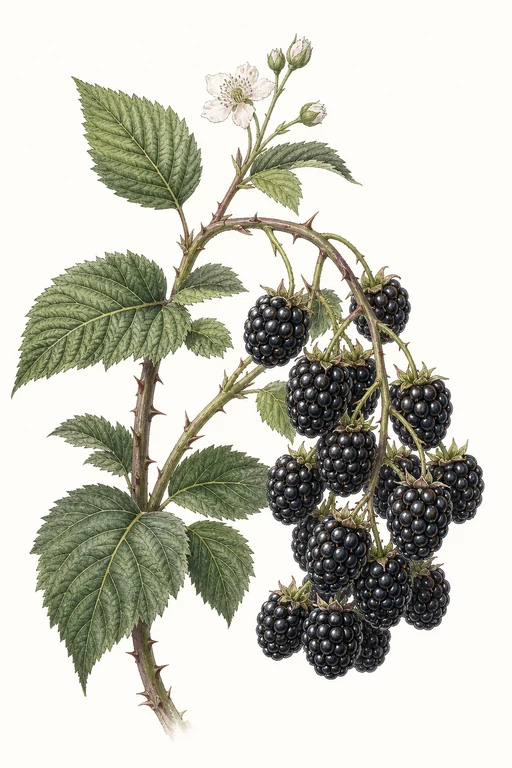
Sink your spoon into Marion’s blackberry—an inky, wine-dark berry with a bright, tangy snap and a sweet, perfumed finish that lingers like summer dusk.
At maturity the fruit is richly textured, plump and juicy, with a gentle give that releases its full flavor in every handful. Ideal for fresh enjoyment and for turning into bold, deep-colored sauces, preserves, and pies where that classic blackberry character shines.
Light: Full SunMaturity: 109 DaysHabit: Spreading
Planting schedules and alerts are optimized for Columbus (Zone 6b).
Crop Dates
| Milestone | Date |
|---|---|
| Start Indoors | Direct Sow |
| Last Frost | Apr 25th |
| Transplant / Sow Outdoors | Apr 25th |
| Harvest Begins | Aug 12th |
| Harvest Ends | Oct 16th |
Crop Details
| Trait | Value |
|---|---|
| Days to Maturity | 109 |
| Sun Requirements | Full Sun |
| Growth Habit | Spreading |
| Support Needed | Trellis |
| Planting Depth | Normal |
| Germination Temp (°F) | 70 |
| Min Soil Temp (°F) | 40 |
| Min Night Temp (°F) | 35 |
| Harden Off (days) | Not Required |
Culinary Notes

Chef's Note
Marion blackberries bring a wine-dark hit of acidity with a juicy, gentle give—so they taste alive straight off the spoon and also stand up to heat. When cooked, they reduce into a thick, glossy sauce that stays tart enough to balance fat and turns pastry fillings bold without tasting flat.

Best Uses
- fresh eating with minimal interference (handfuls, yogurt, or cream)
- thick berry preserves and jam where the pectin sets glossy and dark
- blackberry pie filling that holds shape and doesn’t go watery
- wine-dark sauce for duck or pork—reduce until it clings

Flavor Profile

Kitchen Pairings
Frequently Asked Questions
What pest or disease most commonly affects marionberries (Rubus L. subgenus Rubus), and what should I do if I see it?
How often should I water marionberries during their main growing phase, and what soil moisture level do they need?
How can I tell when marionberries are ready to harvest?
Sowing Tips

Transplant Conditions
Wait until soil reaches 40°F and nights stay above 35°F before moving outdoors.
Expert Note

Plant blackberry canes in full sun with well-drained soil and keep new canes supported to manage sprawling growth and airflow for disease prevention.