
Mexican Lime
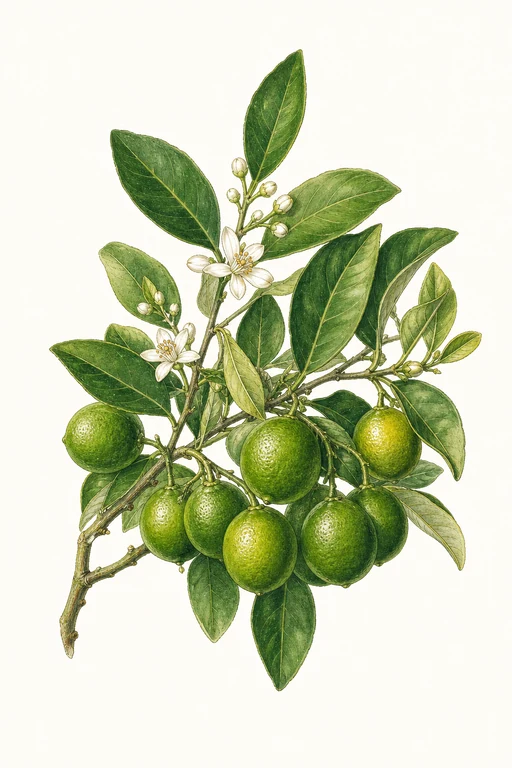
Aromas of bright citrus oil rise the moment you brush the foliage—Mexican Lime brings a vivid, tangy fragrance with a juicy, finely textured bite and a classic lime snap.
Expect abundant, small-to-medium fruits with a thin, tender rind that turns from glossy green to a more golden-green as it ripens, ideal for zest-forward flavor and lively juice. Grow for fresh sips and vibrant sauces, and for pickling where its crisp acidity shines year after year.
Light: Full SunMaturity: 365 DaysHabit: Shrub
Planting schedules and alerts are optimized for Columbus (Zone 6b).
Crop Dates
| Milestone | Date |
|---|---|
| Last Frost | Apr 25th |
| Growing Approach | Protected Environment Only |
Crop Details
| Trait | Value |
|---|---|
| Days to Maturity | 365 |
| Sun Requirements | Full Sun |
| Growth Habit | Shrub |
| Support Needed | None |
| Planting Depth | Normal |
| Germination Temp (°F) | 75 |
| Min Soil Temp (°F) | 60 |
| Min Night Temp (°F) | 55 |
| Harden Off (days) | Not Required |
Culinary Notes

Chef's Note
Mexican Lime’s thin rind and aggressive citrus snap make it a zester’s tool—grate it hard for perfume, then juice for the sting. It’s built for fast, high-heat or no-cook applications where that clean, oily brightness cuts through fat and smoke.

Best Uses
- fresh lime juice for punchy dressings and ceviche
- zest-heavy marinades and quick cure treatments
- quick pickles where acidity stays crisp
- tangy sauces and salsas that need fragrance as much as bite

Flavor Profile

Frequently Asked Questions
What pest or disease most commonly affects Mexican lime (Citrus aurantiifolia), and how do I treat it at home?
How often should I water my Mexican lime during the main growing phase, and what soil moisture level should I aim for?
How can I tell when Mexican lime (Citrus aurantiifolia) is ready to harvest?
Sowing Tips

Transplant Conditions
Wait until soil reaches 60°F and nights stay above 55°F before moving outdoors.
Expert Note

Grow Mexican/Key limes in full sun with fast-draining soil; in colder zones they’re best kept as container plants so you can move them indoors when nights drop.