
Mino Early
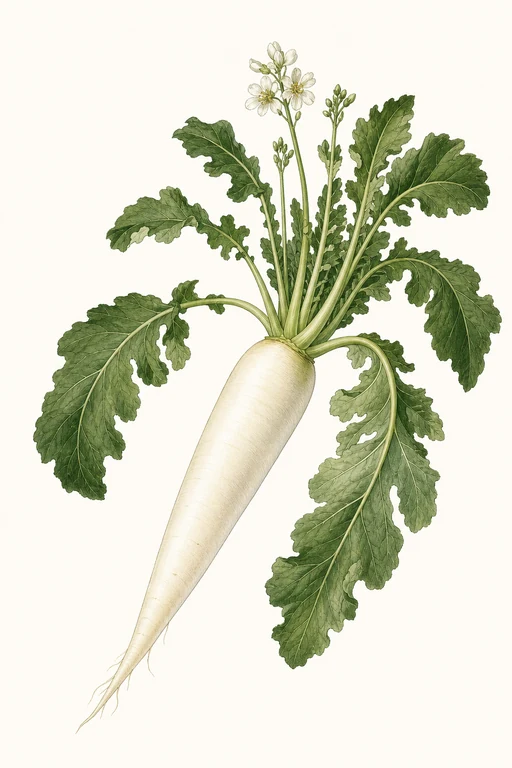
Sweetly mild and delicately crisp, Mino Early daikon develops a clean, refreshing bite with a tender, juicy texture that stays pleasantly snappy from garden to table.
Its smooth, uniform roots are prized for their quick turnaround—about 50 days—making it an ideal choice when you want flavor that feels bright and effortless. Enjoy Mino Early as a fresh, crunchy radish, or let its gentle character shine in quick pickles and savory sauces.
Light: Full SunMaturity: 50 DaysHabit: Taproot
Planting schedules and alerts are optimized for Columbus (Zone 6b).
Crop Dates
| Milestone | Date |
|---|---|
| Start Indoors | Direct Sow |
| Last Frost | Apr 25th |
| Transplant / Sow Outdoors | Apr 25th |
| Harvest Begins | Jun 14th |
| Harvest Ends | Oct 16th |
Crop Details
| Trait | Value |
|---|---|
| Days to Maturity | 50 |
| Sun Requirements | Full Sun |
| Growth Habit | Taproot |
| Support Needed | None |
| Planting Depth | Normal |
| Germination Temp (°F) | 70 |
| Min Soil Temp (°F) | 45 |
| Min Night Temp (°F) | 32 |
| Harden Off (days) | Not Required |
Culinary Notes

Chef's Note
Mino Early daikon is for when you want radish snap without the peppery slap—its juicy crunch keeps its integrity in sharp vinegar so the bite reads clean, not cooked-through. Slice it paper-thin and let soy, vinegar, ginger, and sesame do the heavy lifting while the sweetness stays audible.

Best Uses
- thin-matched slices for crunchy salads with minimal dressing
- quick pickling where it stays bright and crisp
- shaved daikon in cold sesame sauces
- daikon-forward crudités with salt, citrus, and warm fat

Flavor Profile

Kitchen Pairings
Frequently Asked Questions
What pest or disease most often affects Raphanus sativus (radish), and how do I control it?
How often should I water radishes during the main growing phase (about weeks 2–6)?
How can I tell when my radishes are ready to harvest at ~50 days?
Sowing Tips

Transplant Conditions
Wait until soil reaches 45°F and nights stay above 32°F before moving outdoors.
Expert Note

For early tenderness and mild flavor, sow daikon as soon as soil is workable and keep moisture consistent to avoid splitting or bolting.