
Minowase
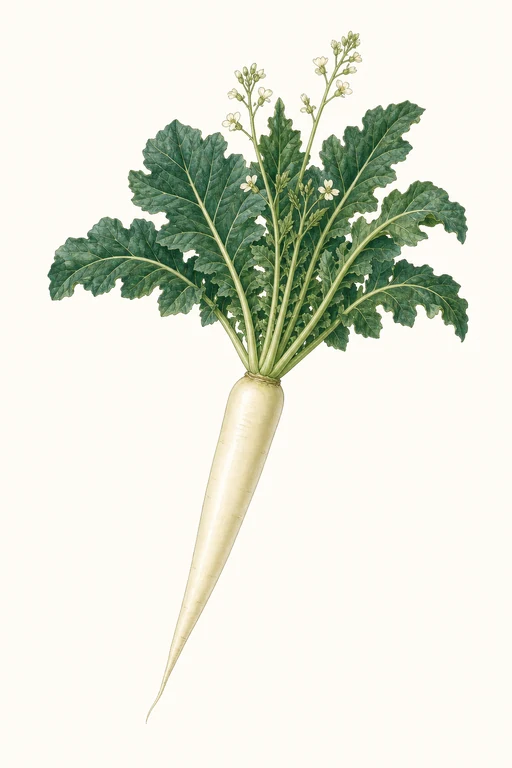
Silky-smooth and luminous, Minowase daikon stretches into long, tapered roots with a crisp snap and a clean, gently sweet bite.
The flesh stays tender and ivory-white through 60 days, offering a refined texture that shines in fresh slices and quick pickles, and turns silky when roasted or simmered for mellow flavor. A garden favorite for growers who want dependable size, elegant form, and a bright, peppery freshness that never overwhelms.
Light: Full SunMaturity: 60 DaysHabit: Taproot
Planting schedules and alerts are optimized for Columbus (Zone 6b).
Crop Dates
| Milestone | Date |
|---|---|
| Start Indoors | Direct Sow |
| Last Frost | Apr 25th |
| Transplant / Sow Outdoors | Apr 25th |
| Harvest Begins | Jun 24th |
| Harvest Ends | Oct 16th |
Crop Details
| Trait | Value |
|---|---|
| Days to Maturity | 60 |
| Sun Requirements | Full Sun |
| Growth Habit | Taproot |
| Support Needed | None |
| Planting Depth | Normal |
| Germination Temp (°F) | 70 |
| Min Soil Temp (°F) | 40 |
| Min Night Temp (°F) | 35 |
| Harden Off (days) | Not Required |
Culinary Notes

Chef's Note
Minowase’s long, tender interior gives you that daikon thing—crunch at first bite, then a mild peppery fade that won’t bully the plate. Heat it and it turns silky and sweet, so it plays equally well in quick pickles and dashi-braised comfort.

Best Uses
- paper-thin fresh slices with a slick of rice vinegar and sesame oil
- quick pickles (shio-kōji or sweet-sour brine) that stay crisp
- roasted wedges until the edges bronzed and the center turns silky
- simmered daikon in dashi for a mellow, savory center

Flavor Profile

Kitchen Pairings
Frequently Asked Questions
What pest or disease commonly affects radish (Raphanus sativus) and what should I do?
How often should I water radish (Raphanus sativus) during its main growing phase?
How can I tell when Minowase radish (Raphanus sativus) is ready to harvest?
Sowing Tips

Transplant Conditions
Wait until soil reaches 40°F and nights stay above 35°F before moving outdoors.
Expert Note

Sow daikon directly where it will grow, keep soil evenly moist, and avoid heat to prevent bitterness and bolting.