
Moonsong Deep Orange
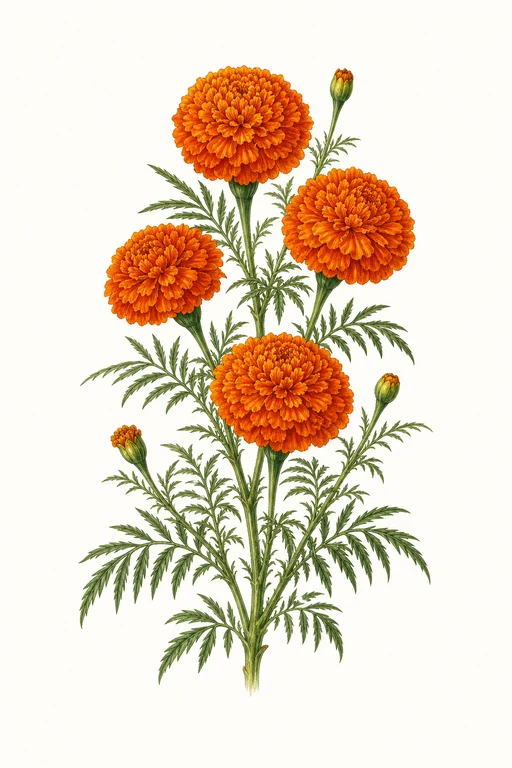
Sunset-bright blooms arrive in steady waves, their deep orange petals glowing like burnished copper in warm light.
Moonsong Deep Orange forms sturdy, upright plants with full, double flower heads that hold their shape and add rich texture to beds and borders. Let this African marigold be your bold, reliable color for long-lasting display—ideal for mass planting and companion planting where you want dependable, garden-ready impact.
Light: Full SunMaturity: 70 DaysHabit: Upright
Crop Dates : 8a
| Milestone | Date |
|---|---|
| Start Indoors | Feb 25th |
| Last Frost | Apr 1st |
| Transplant / Sow Outdoors | Apr 15th |
| Harvest Begins | Jun 24th |
| Harvest Ends | Nov 5th |
Crop Details
| Trait | Value |
|---|---|
| Days to Maturity | 70 |
| Sun Requirements | Full Sun |
| Growth Habit | Upright |
| Support Needed | None |
| Planting Depth | Normal |
| Germination Temp (°F) | 70 |
| Min Soil Temp (°F) | 60 |
| Min Night Temp (°F) | 40 |
| Harden Off (days) | 7 |
Culinary Notes

Chef's Note
Ornamental African marigold (Tagetes erecta) even if marked edible; no culinary flavor/usage specs provided here, so I’m not going to invent descriptors, preparations, or pairings. Treat as strictly non-consumption unless you have a trusted, specific edible-flower preparation guide for this exact variety.

Flavor Profile
Frequently Asked Questions
What pest or disease commonly affects Tagetes erecta (African marigold), and how can I treat it?
How often should I water Tagetes erecta during the main growing phase?
How do I know when Tagetes erecta (African marigold) is ready to harvest?
Sowing Tips

Transplant Conditions
Wait until soil reaches 60°F and nights stay above 40°F before moving outdoors. Harden off for 7 days first.
Expert Note

For nonstop color and sturdier plants, keep them in full sun and avoid water-logged soil; thin any crowded seedlings early.