
Murasaki-29
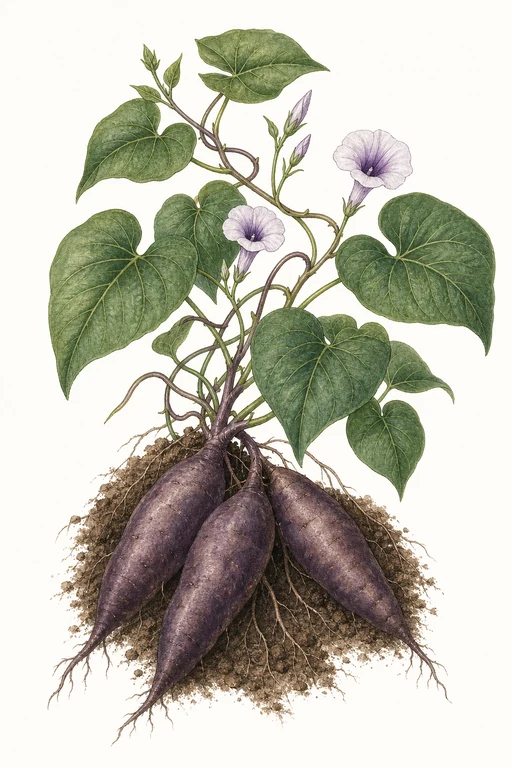
Slip your spoon into Murasaki-29 and you’ll meet a velvety, richly colored purple flesh that glows from deep violet to near ink-blue at the center.
Roasted until tender, it turns creamy and sweet with a smooth, spoonable texture—ideal for vibrant purées, striking wedges, and vivid sauces that keep their color beautifully. A home-garden favorite for its dependable 90-day rhythm and showstopping, market-class purple roots that look as good as they taste.
Light: Full SunMaturity: 90 DaysHabit: Vine
Planting schedules and alerts are optimized for Columbus (Zone 6b).
Crop Dates
| Milestone | Date |
|---|---|
| Start Indoors | Direct Sow |
| Last Frost | Apr 25th |
| Transplant / Sow Outdoors | Apr 25th |
| Harvest Begins | Jul 24th |
| Harvest Ends | Oct 16th |
Crop Details
| Trait | Value |
|---|---|
| Days to Maturity | 90 |
| Sun Requirements | Full Sun |
| Growth Habit | Vine |
| Support Needed | None |
| Planting Depth | Normal |
| Germination Temp (°F) | 80 |
| Min Soil Temp (°F) | 65 |
| Min Night Temp (°F) | 55 |
| Harden Off (days) | 10 |
Culinary Notes

Chef's Note
Murasaki-29 cooks down into a dense, creamy mash with real sweetness and earthy ballast, so it doesn’t need heavy masking—just fat and a bright acid to sharpen the finish. Roast it until it’s fully yielding, then purée or mash; the purple color is most theatrical when you keep the texture smooth and the sauce thick enough to cling.

Best Uses
- roasted wedges that mash easily into a silky side
- vivid purée (with butter or olive oil) that stays smooth
- thick, colored pies or savory custards for striking cross-sections
- sweet potato gnocchi or dumplings where the starch helps them stay tender

Flavor Profile

Kitchen Pairings
Frequently Asked Questions
What’s the most common pest or disease on Ipomoea batatas (murasaki sweet potato) and what should I do if I see it?
How often should I water Ipomoea batatas during the main growth phase (after slips are established)?
How can I tell when my Ipomoea batatas is ready to harvest?
Sowing Tips

Transplant Conditions
Wait until soil reaches 65°F and nights stay above 55°F before moving outdoors. Harden off for 10 days first.
Expert Note

For best uniform tubers like Murasaki-29, plant certified seed potatoes after soil warms and keep moisture consistent as tubers form.