
Murasaki
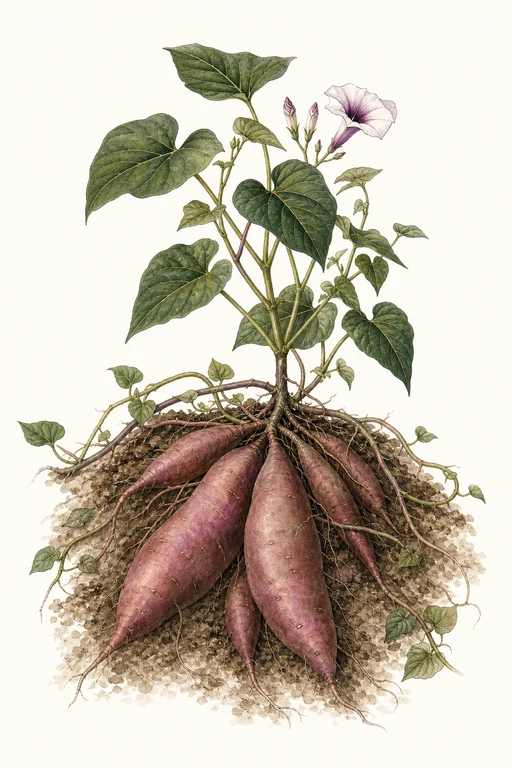
Slip your fork into Murasaki sweet potatoes and you’ll meet a velvety, spoon-smooth interior wrapped in a satin-smooth skin.
The flesh glows with a rich, violet-tinged purple that deepens as it cures, turning wonderfully sweet and aromatic—ideal for roasting until caramel-edged, or for mashing into silky purées and vibrant sauces. A dependable 90-day favorite for home gardeners, Murasaki delivers consistently shaped roots with a showy color that makes every harvest feel like a small triumph.
Light: Full SunMaturity: 90 DaysHabit: Vine
Planting schedules and alerts are optimized for Columbus (Zone 6b).
Crop Dates
| Milestone | Date |
|---|---|
| Start Indoors | Direct Sow |
| Last Frost | Apr 25th |
| Transplant / Sow Outdoors | Apr 25th |
| Harvest Begins | Jul 24th |
| Harvest Ends | Oct 16th |
Crop Details
| Trait | Value |
|---|---|
| Days to Maturity | 90 |
| Sun Requirements | Full Sun |
| Growth Habit | Vine |
| Support Needed | None |
| Planting Depth | Normal |
| Germination Temp (°F) | 75 |
| Min Soil Temp (°F) | 65 |
| Min Night Temp (°F) | 55 |
| Harden Off (days) | Not Required |
Culinary Notes

Chef's Note
Murasaki’s violet-tinged flesh turns luxuriously smooth and aggressively sweet, so it caramelizes beautifully on roast—aim for crisped edges and a tender center. It’s built for spoonable purées and thick blends where its texture stays silky instead of grainy.

Best Uses
- hot-oven roasting until caramel-edged (serve straight with salt and butter)
- silky mashes and mash bowls—no lumps, just glossy texture
- vibrant purées for drizzling over pork or duck
- thick, orange-tinted purée soups and smoky curry bases (blend to satin)

Flavor Profile

Kitchen Pairings
Frequently Asked Questions
What pest or disease most commonly affects Ipomoea batatas (murasaki) and how do I control it?
How often should I water murasaki during its main growing phase?
How can I tell when murasaki is ready to harvest?
Sowing Tips

Transplant Conditions
Wait until soil reaches 65°F and nights stay above 55°F before moving outdoors.
Expert Note

Use sprout slips or rooted cuttings (not seed) and wait to transplant until soil is warm—cold soil will stall or kill slips.