
Nancy Hall
Silky, creamy flesh with a gentle sweetness greets you at harvest—Nancy Hall’s white sweet potatoes bake into a velvety, spoon-soft texture that’s as comforting as it is elegant.
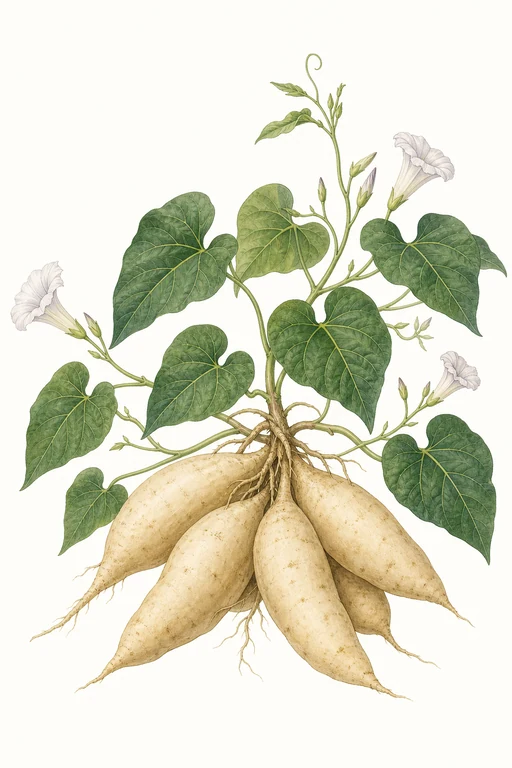
The roots form a smooth, uniform oval with pale, parchment-toned skin and a bright, buttery interior that holds its charm from first glance to the final serving. Grow Nancy Hall for dependable, market-class size and a classic, crowd-pleasing flavor profile that shines in casseroles, roasted wedges, and velvety mashes, as well as hearty soups and pies.
Light: Full SunMaturity: 90 DaysHabit: Vine
Planting schedules and alerts are optimized for Columbus (Zone 6b).
Crop Dates
| Milestone | Date |
|---|---|
| Start Indoors | Direct Sow |
| Last Frost | Apr 25th |
| Transplant / Sow Outdoors | May 9th |
| Harvest Begins | Aug 7th |
| Harvest Ends | Oct 16th |
Crop Details
| Trait | Value |
|---|---|
| Days to Maturity | 90 |
| Sun Requirements | Full Sun |
| Growth Habit | Vine |
| Support Needed | None |
| Planting Depth | Normal |
| Germination Temp (°F) | 75 |
| Min Soil Temp (°F) | 65 |
| Min Night Temp (°F) | 55 |
| Harden Off (days) | Not Required |
Culinary Notes

Chef's Note
Nancy Hall’s white sweet potato flesh turns silky and tender without getting fibrous, so it’s a dream for mashes and baked halves where you want a spoonable texture. Its sweetness stays gentle—just enough to carry butter, cinnamon, and warm aromatics without overpowering savory dishes.

Best Uses
- baked whole or halved—serve with butter and a pinch of salt for a velvety spoonable center
- roasted wedges, cut thick so the edges bronze before the inside turns creamy
- mashed sweet potatoes with cream/butter for a smooth, cohesive puree
- casseroles and pies where it needs to set up tender and not go gummy

Flavor Profile

Frequently Asked Questions
What pest or disease commonly affects Ipomoea batatas (sweet potato) in home gardens, and how do I manage it?
How often should I water Ipomoea batatas during the main growing phase?
How can I tell when Nancy Hall sweet potatoes are ready to harvest?
Sowing Tips

Transplant Conditions
Wait until soil reaches 65°F and nights stay above 55°F before moving outdoors.

Direct Sow Preferred
Sensitive roots — does not transplant well. If starting indoors, use biodegradable pots and disturb roots as little as possible when moving outdoors.
Expert Note

Nancy Hall yellow yam is typically grown from yam sets/slips rather than transplanted seedlings—plant when warm weather is established to avoid chilling injury.