
Napa Chardonnay
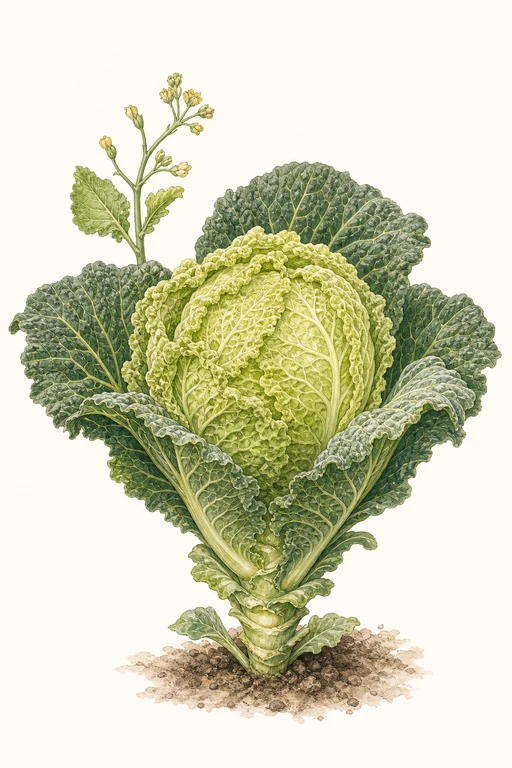
Crisp, cool-to-the-touch leaves unfurl in a tight, elegant head with a softly savoyed texture—like fine green lace gathered into a graceful rosette.
Napa Chardonnay Savoy Cabbage offers a clean, mild sweetness and a tender bite that holds its character beautifully for fresh salads and quick sautéed greens, as well as silky slaws and bright pickles.
Light: Full SunMaturity: 55 DaysHabit: Rosette
Crop Dates : 4b
| Milestone | Date |
|---|---|
| Start Indoors | Apr 15th |
| Last Frost | May 13th |
| Transplant / Sow Outdoors | May 13th |
| Harvest Begins | Jul 7th |
| Harvest Ends | Sep 27th |
Crop Details
| Trait | Value |
|---|---|
| Days to Maturity | 55 |
| Sun Requirements | Full Sun |
| Growth Habit | Rosette |
| Support Needed | None |
| Planting Depth | Normal |
| Germination Temp (°F) | 75 |
| Min Soil Temp (°F) | 45 |
| Min Night Temp (°F) | 32 |
| Harden Off (days) | 6 |
Culinary Notes

Chef's Note
This savoy-style head eats like it was made for fast heat and sharp acid: the leaves soften without collapsing, so slaw stays crisp and sautéed greens turn silky rather than stewy. Its clean mild sweetness lets ginger, lime, and vinegar punch through without fighting the cabbage.

Best Uses
- shaved or ribboned slaws that stay snappy under tangy dressings
- quick sautéed greens where the leaves turn glossy-tender in minutes
- bright quick pickles (vinegar-salt) for a snappy, lacey texture
- hot-and-cold salads—briefly dressed and finished with fresh herbs

Flavor Profile

Kitchen Pairings
Frequently Asked Questions
What pests or diseases most commonly affect Brassica oleracea var. capitata (cabbage) and how do I treat them?
How often should I water Brassica oleracea var. capitata during the main growing phase, and what soil moisture level should I aim for?
How can I tell when Brassica oleracea var. capitata is ready to harvest?
Sowing Tips

Transplant Conditions
Wait until soil reaches 45°F and nights stay above 32°F before moving outdoors. Harden off for 6 days first.
Expert Note

For sweet, tender heads, keep soil evenly moist and protect from flea beetles early with row cover until established.