
Natacha
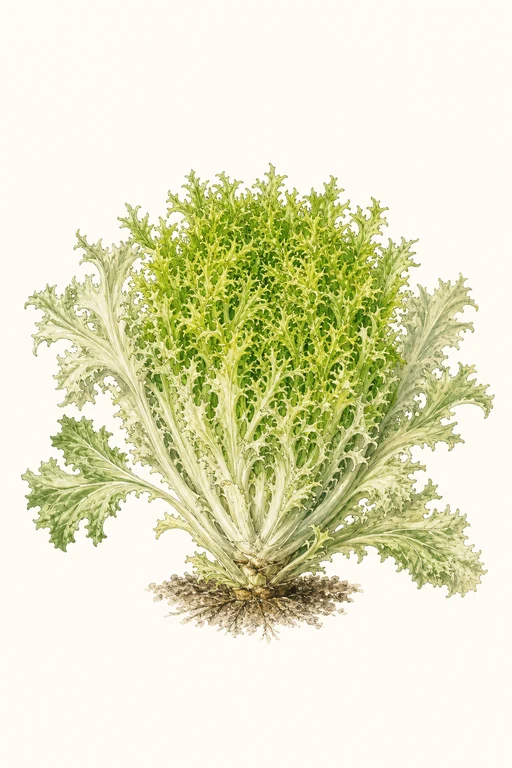
Tender, tightly ruffled fronds unfurl in a cool-season crescendo—Natacha’s frisee forms a crisp, feathery head with a luminous green heart and softly blanched outer tones.
The flavor is pleasantly bittersweet, with a clean snap and delicate texture that holds beautifully from garden to bowl. Grow Natacha for fresh salads and elegant frisee-forward plates, and for quick sautéing or braising when you want its ruffles to turn silky and fragrant.
Light: Part SunMaturity: 60 DaysHabit: Rosette
Planting schedules and alerts are optimized for Columbus (Zone 6b).
Crop Dates
| Milestone | Date |
|---|---|
| Start Indoors | Direct Sow |
| Last Frost | Apr 25th |
| Transplant / Sow Outdoors | Apr 25th |
| Harvest Begins | Jun 24th |
| Harvest Ends | Oct 16th |
Crop Details
| Trait | Value |
|---|---|
| Days to Maturity | 60 |
| Sun Requirements | Part Sun |
| Growth Habit | Rosette |
| Support Needed | None |
| Planting Depth | Normal |
| Germination Temp (°F) | 45 |
| Min Soil Temp (°F) | 40 |
| Min Night Temp (°F) | 32 |
| Harden Off (days) | 5 |
Culinary Notes

Chef's Note
Natacha frisee brings an elegant bittersweet bite with a fragile, feathery crunch—dress it while it’s cold so those ruffles hold shape. For cooking, give it a fast sauté or brief braise so the outer tones go silky without losing the green heart’s bright snap.

Best Uses
- classic frisee salad with a sharp vinaigrette that clings to the ruffles
- warm lardon-style sauté or quick pan-braise to turn it silky while keeping some bite
- tucking into composed plates as a cool, bitter counterpoint to rich proteins and fats

Flavor Profile

Kitchen Pairings
Frequently Asked Questions
How do I prevent and treat downy mildew in Cichorium endivia (frisée) if leaves start turning yellowish and patchy?
How often should I water Cichorium endivia (frisée) during the 60-day growing phase for best leaf texture?
What are the best signs that frisée (Cichorium endivia) is ready to harvest around day 60?
Sowing Tips

Transplant Conditions
Wait until soil reaches 40°F and nights stay above 32°F before moving outdoors. Harden off for 5 days first.
Expert Note

For frisee, aim for cool weather and harvest repeatedly from outer leaves for the best texture.