
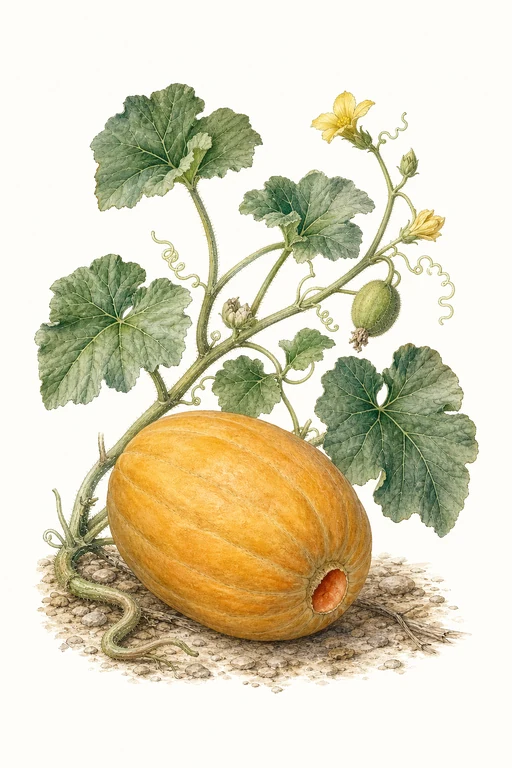
Navajo Melon
Sun-warmed and honeyed, Navajo Melon offers a fragrant, softly sweet flavor with a mellow, custard-like tenderness at peak ripeness.
The flesh turns a luminous, salmon-amber tone and melts with a velvety, spoonable texture that’s especially prized for fresh enjoyment and spooning straight from the fruit. Grow this casaba-style favorite for its long, patient season and its richly aromatic presence—an heirloom-worthy treat from your own garden to your table.
Light: Full SunMaturity: 85 DaysHabit: Vine
Planting schedules and alerts are optimized for Columbus (Zone 6b).
Crop Dates
| Milestone | Date |
|---|---|
| Start Indoors | Apr 11th |
| Last Frost | Apr 25th |
| Transplant / Sow Outdoors | Apr 25th |
| Harvest Begins | Jul 19th |
| Harvest Ends | Oct 16th |
Crop Details
| Trait | Value |
|---|---|
| Days to Maturity | 85 |
| Sun Requirements | Full Sun |
| Growth Habit | Vine |
| Support Needed | Trellis |
| Planting Depth | Normal |
| Germination Temp (°F) | 75 |
| Min Soil Temp (°F) | 65 |
| Min Night Temp (°F) | 55 |
| Harden Off (days) | 12 |
Culinary Notes

Chef's Note
A casaba type built for eating cold and unmasked: at peak, it turns custardy and melts, so it deserves minimal interference—salt, citrus, and a creamy dairy are the best framing. You’ll taste more “honeyed perfume” than juicy crunch, which makes it perfect for spoon desserts and purées rather than sturdy fruit salads.

Best Uses
- sliced chilled fruit with flaky salt to sharpen the perfume
- spoon-from-the-fruit dining—no knife, just curdlike custard texture
- light honey-lime or citrus syrup for a quick dessert spooning
- smooth melon purée for granita or ice—no cooking needed

Flavor Profile

Kitchen Pairings
Frequently Asked Questions
Why are my Cucumis melo (Navajo Melon) leaves developing powdery white spots, and what should I do?
How often should I water Cucumis melo during the main growing phase, and what soil moisture level should I maintain?
How can I tell when Navajo Melon (Cucumis melo) is ready to harvest?
Sowing Tips

Transplant Conditions
Wait until soil reaches 65°F and nights stay above 55°F before moving outdoors. Harden off for 12 days first.

Direct Sow Preferred
Sensitive roots — does not transplant well. If starting indoors, use biodegradable pots and disturb roots as little as possible when moving outdoors.
Expert Note

For best sweetness, start seeds indoors only if you can transplant into consistently warm soil and then mulch heavily to conserve moisture during hot arid-period growth.