
Navajo Winter Melon
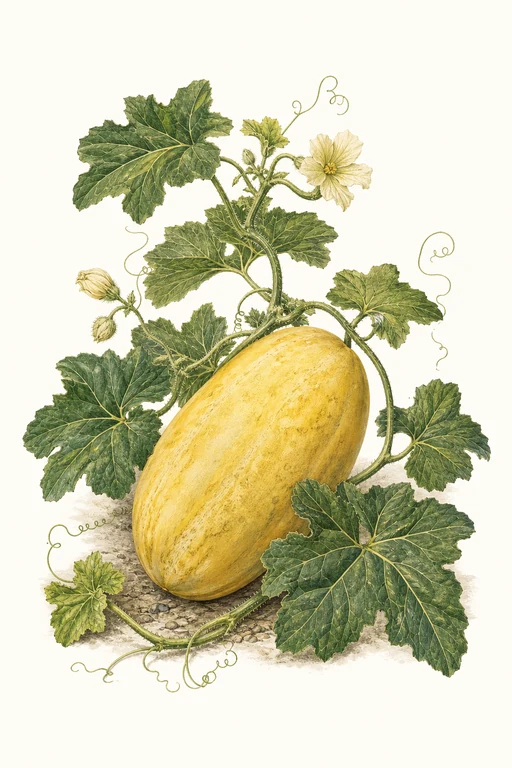
Fragrant and honeyed at maturity, Navajo Winter Melon fills the garden with a warm, sun-baked perfume and delivers a mellow, subtly sweet flavor when fully ripened.
The flesh is tender and custard-smooth with a delicate, buttery texture, making it a standout for fresh slices and for spoonable preserves and thick, fragrant sauces. A true winter-class casaba type, it’s prized for its long season and satisfying, slow-to-peak sweetness—grow it for the moment it turns golden and sings.
Light: Full SunMaturity: 95 DaysHabit: Vine
Planting schedules and alerts are optimized for Columbus (Zone 6b).
Crop Dates
| Milestone | Date |
|---|---|
| Start Indoors | Apr 25th |
| Last Frost | Apr 25th |
| Transplant / Sow Outdoors | May 9th |
| Harvest Begins | Aug 12th |
| Harvest Ends | Oct 16th |
Crop Details
| Trait | Value |
|---|---|
| Days to Maturity | 95 |
| Sun Requirements | Full Sun |
| Growth Habit | Vine |
| Support Needed | Trellis |
| Planting Depth | Normal |
| Germination Temp (°F) | 75 |
| Min Soil Temp (°F) | 70 |
| Min Night Temp (°F) | 55 |
| Harden Off (days) | 12 |
Culinary Notes

Chef's Note
When this casaba hits its golden window, the flesh turns custard-smooth and keeps its shape for slicing—so you get perfume and sweetness without watery slip. It’s built for slow, fragrant cooking (preserves and thick sauces) where that buttery melon texture can be spooned and carried by aromatics.

Best Uses
- chilled fresh slices when fully golden (no dressing needed)
- spoonable preserves—cook just until it turns translucent and fragrant
- thick fragrant sauces for pork, poultry, or smoky duck
- creamy purees or soup base, blended smooth and served cold

Flavor Profile

Frequently Asked Questions
What pest or disease most commonly affects Cucumis melo (Navajo Winter Melon), and how can I manage it at home?
How often should I water Navajo Winter Melon during the main growing phase (vining and fruit set)?
How do I tell when Navajo Winter Melon (Cucumis melo) is ready to harvest?
Sowing Tips

Transplant Conditions
Wait until soil reaches 70°F and nights stay above 55°F before moving outdoors. Harden off for 12 days first.

Direct Sow Preferred
Sensitive roots — does not transplant well. If starting indoors, use biodegradable pots and disturb roots as little as possible when moving outdoors.
Expert Note

For cucurbit root survival, transplant only when soil is warm and handle seedlings with minimal disturbance; use row cover early to prevent cool nights from slowing vines.