
Organic Chervil
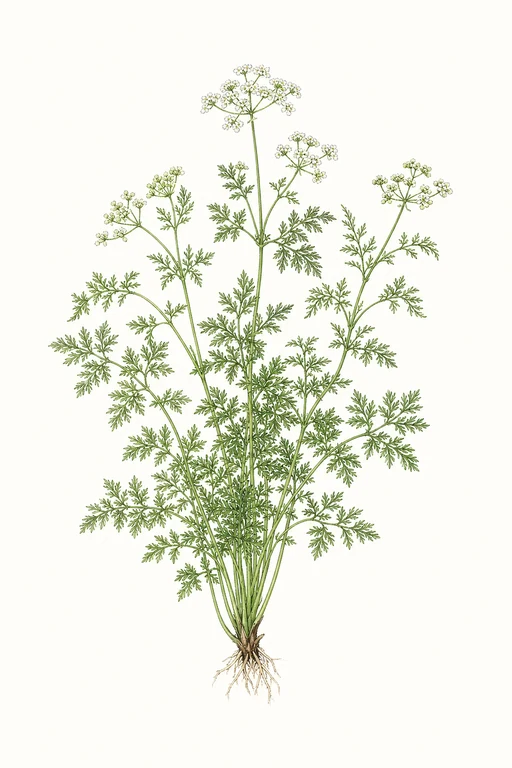
Feathery, lacy fronds unfurl in cool weather with a delicate, anise-bright fragrance that feels like spring on the breeze.
Organic Chervil forms tender, upright sprays with a soft, silky texture—ideal for letting its subtle flavor shine in fresh preparations, and for stirring into delicate sauces where its aroma stays vivid. A pollinator-friendly favorite for the home gardener, it’s ready in about 40 days, rewarding early sowings with a steady harvest of fragrant greens.
Light: Part SunMaturity: 40 DaysHabit: Rosette
Planting schedules and alerts are optimized for Columbus (Zone 6b).
Crop Dates
| Milestone | Date |
|---|---|
| Start Indoors | Mar 28th |
| Last Frost | Apr 25th |
| Transplant / Sow Outdoors | Apr 25th |
| Harvest Begins | Jun 4th |
| Harvest Ends | Oct 16th |
Crop Details
| Trait | Value |
|---|---|
| Days to Maturity | 40 |
| Sun Requirements | Part Sun |
| Growth Habit | Rosette |
| Support Needed | None |
| Planting Depth | Surface |
| Germination Temp (°F) | 60 |
| Min Soil Temp (°F) | 45 |
| Min Night Temp (°F) | 35 |
| Harden Off (days) | 6 |
Culinary Notes

Chef's Note
Chervil’s sweet-anise perfume is fragile—treat it like a finishing herb so its aroma stays vivid and doesn’t turn flat. Chop it fine and fold in at the last moment to keep the leaves silky and the flavor bright.

Best Uses
- finishing chopped chervil over warm eggs and buttered vegetables
- stirring into a quick bearnaise-style or cream sauce at the very end
- whisking into herb yogurt or crème fraîche for a clean, aromatic spoonful
- lightly folding into spring potato salad or vinaigrette-dressed greens

Flavor Profile

Kitchen Pairings
Frequently Asked Questions
What pests or diseases commonly affect Anthriscus cerefolium (French chervil), and how can I treat them organically?
How often should I water Anthriscus cerefolium during the main growing phase?
How do I know when Anthriscus cerefolium is ready to harvest?
Sowing Tips

Transplant Conditions
Wait until soil reaches 45°F and nights stay above 35°F before moving outdoors. Harden off for 6 days first.
Expert Note

Keep chervil cool and evenly moist—sow for flavor in mild weather and avoid hot spells that drive early bolting.