
Ouro Branco
Aromatic and earthy, Ouro Branco amaranth brings a rare, luminous presence to the garden—its grain develops with a clean, nutty depth and a pleasantly chewy bite.
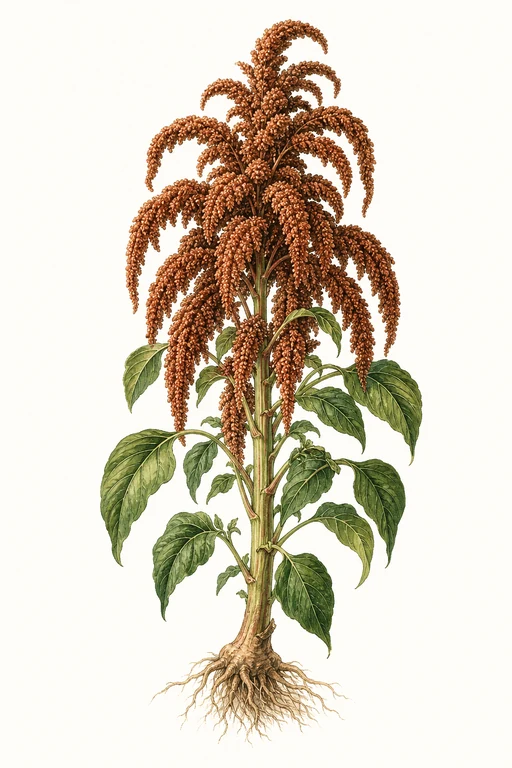
At maturity, the plants stand tall and stately, producing abundant seed heads that dry down reliably for dependable harvest. Grow Ouro Branco for its heirloom character and its distinctive, root-leaning vigor that rewards the patient gardener with a pantry-worthy crop.
Light: Full SunMaturity: 110 DaysHabit: Upright
Planting schedules and alerts are optimized for Columbus (Zone 6b).
Crop Dates
| Milestone | Date |
|---|---|
| Start Indoors | Direct Sow |
| Last Frost | Apr 25th |
| Transplant / Sow Outdoors | Apr 25th |
| Harvest Begins | Aug 13th |
| Harvest Ends | Oct 16th |
Crop Details
| Trait | Value |
|---|---|
| Days to Maturity | 110 |
| Sun Requirements | Full Sun |
| Growth Habit | Upright |
| Support Needed | None |
| Planting Depth | Normal |
| Germination Temp (°F) | 70 |
| Min Soil Temp (°F) | 60 |
| Min Night Temp (°F) | 55 |
| Harden Off (days) | Not Required |
Culinary Notes

Chef's Note
Ouro Branco’s grain cooks up with a toothy, almost risotto-resistant chew, so it holds up in grain bowls and reheats without turning mushy. Its nutty-earth profile loves fats and citrus—think browned dairy and a bright squeeze of lime—to keep it from feeling heavy.

Best Uses
- cook as a chewy pilaf grain with browned aromatics
- toasted amaranth for crunch on salads or yogurt
- stovetop porridge/polenta-style base (silky after simmering)
- fold into veggie patties or grain cakes for chew

Flavor Profile

Kitchen Pairings
Frequently Asked Questions
What pest or disease problem commonly affects Amaranthus cruentus (Ouro Branco), and what should I do?
How often should I water Ouro Branco during the main growing phase?
How can I tell when Amaranthus cruentus (Ouro Branco) is ready to harvest?
Sowing Tips

Transplant Conditions
Wait until soil reaches 60°F and nights stay above 55°F before moving outdoors.
Expert Note

Sow shallowly after the soil warms, then keep the stand evenly moist until established to ensure uniform emergence for grain fill.