
Papaya
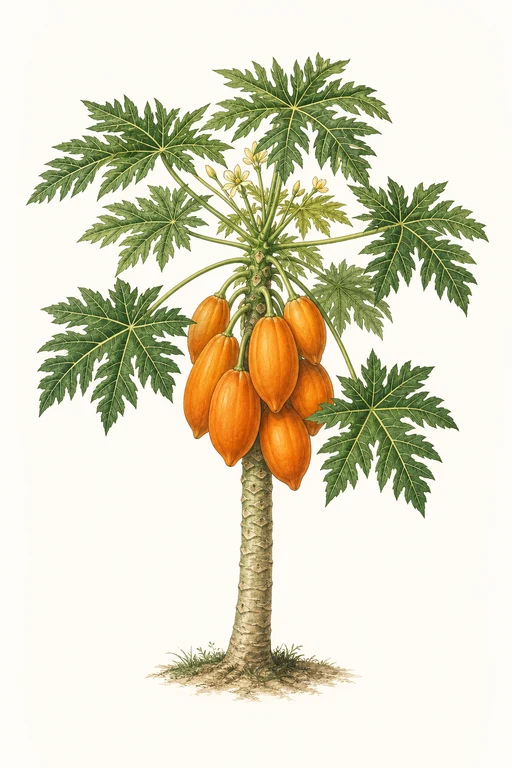
Sun-warmed flesh with a honeyed, musky fragrance—Papaya ripens to a luminous, sunset-orange interior that turns silky-soft as it reaches its 210-day peak.
The fruit’s tender, custard-like texture is prized for fresh enjoyment and for spoon-brightening into smoothies, fruit cups, and vibrant sauces, while its gentle sweetness also shines in preserves and tangy pickled preparations. Grow Papaya for a living harvest that feels like a tropical gift—fragrant, abundant, and unmistakably beautiful on the plant.
Light: Full SunMaturity: 210 DaysHabit: Shrub
Planting schedules and alerts are optimized for Columbus (Zone 6b).
Crop Dates
| Milestone | Date |
|---|---|
| Last Frost | Apr 25th |
| Growing Approach | Protected Environment Only |
Crop Details
| Trait | Value |
|---|---|
| Days to Maturity | 210 |
| Sun Requirements | Full Sun |
| Growth Habit | Shrub |
| Support Needed | None |
| Planting Depth | Normal |
| Germination Temp (°F) | 80 |
| Min Soil Temp (°F) | 70 |
| Min Night Temp (°F) | 55 |
| Harden Off (days) | 10 |
Culinary Notes

Chef's Note
When it hits full ripeness, papaya eats like warm custard—fragrant, smooth, and almost creamy without needing extra fat. Treat it gently: reserve high heat for quick reductions and use lime/ginger to sharpen the fruit’s musky-sweet edge.

Best Uses
- fresh spoon-eating or fruit cups where its custard texture stays intact
- thick smoothies and blended sorbet for a velvety, body-giving mouthfeel
- tangy salsas/chutneys where it mellows heat and amplifies lime
- quick preserves or marmalade-style compotes that lean into its floral-musky perfume

Flavor Profile

Kitchen Pairings
Frequently Asked Questions
What pest or disease most commonly affects Carica papaya, and how do I control it at home?
How often should I water Carica papaya during active fruiting, and what soil moisture level should I aim for?
How can I tell when Carica papaya is ready to harvest?
Sowing Tips

Transplant Conditions
Wait until soil reaches 70°F and nights stay above 55°F before moving outdoors. Harden off for 10 days first.
Expert Note

Papaya is heat-dependent—wait to plant outside only after steady warmth (and expect a long first-fruiting timeline from seed).