
Passionfruit
Aromas first—intense, floral-tropical perfume that blooms from the ripe fruit as if the garden itself has opened a fragrant window.
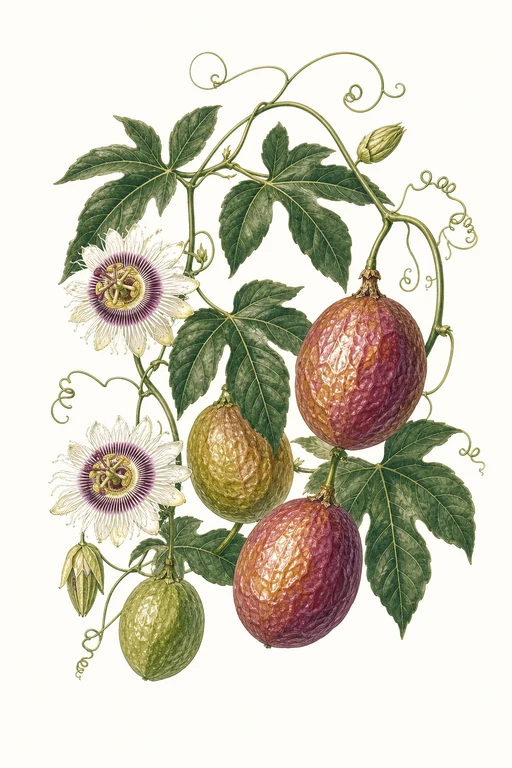
Passionfruit delivers a vivid, tangy-sweet flavor with a juicy, gel-filled texture and a glossy, wrinkled skin that turns from green to deep golden-purple at maturity. Grow Passionfruit for fresh, spoonable pulp, and for stirring into bright sauces, drinks, and preserves that capture its signature passionflower character.
Light: Full SunMaturity: 90 DaysHabit: Vine
Planting schedules and alerts are optimized for Columbus (Zone 6b).
Crop Dates
| Milestone | Date |
|---|---|
| Start Indoors | Direct Sow |
| Last Frost | Apr 25th |
| Transplant / Sow Outdoors | Apr 25th |
| Harvest Begins | Jul 24th |
| Harvest Ends | Oct 16th |
Crop Details
| Trait | Value |
|---|---|
| Days to Maturity | 90 |
| Sun Requirements | Full Sun |
| Growth Habit | Vine |
| Support Needed | Trellis |
| Planting Depth | Normal |
| Germination Temp (°F) | 75 |
| Min Soil Temp (°F) | 70 |
| Min Night Temp (°F) | 55 |
| Harden Off (days) | 10 |
Culinary Notes

Chef's Note
This variety is a small miracle of perfume and bite: the gel-packed pulp brings a fragrant hit and a spoonable, slightly tart snap that holds up in cold drinks and set custards. When you reduce it, it concentrates like a sauce without turning harsh, so it’s built for curds, curd-like desserts, and glossy glazes.

Best Uses
- fresh spooning over yogurt or panna cotta
- swirling into curds and custards for a vivid, perfume-forward tang
- stirring into cocktails and spritzes where the gel adds body
- reducing into a glaze for cheesecake or grilled fruit

Flavor Profile

Kitchen Pairings
Frequently Asked Questions
Why are my Passiflora edulis leaves turning yellow and getting stippled or webbed, and what should I do?
How often should I water Passiflora edulis during the main growing season, and what soil moisture should I maintain?
How can I tell when Passiflora edulis fruit is ready to harvest?
Sowing Tips

Transplant Conditions
Wait until soil reaches 70°F and nights stay above 55°F before moving outdoors. Harden off for 10 days first.
Expert Note

Grow passionfruit as a warm-climate vine; wait until nights are reliably warm and provide a sturdy trellis plus consistent moisture to keep new growth flowering.