
Patterson F1
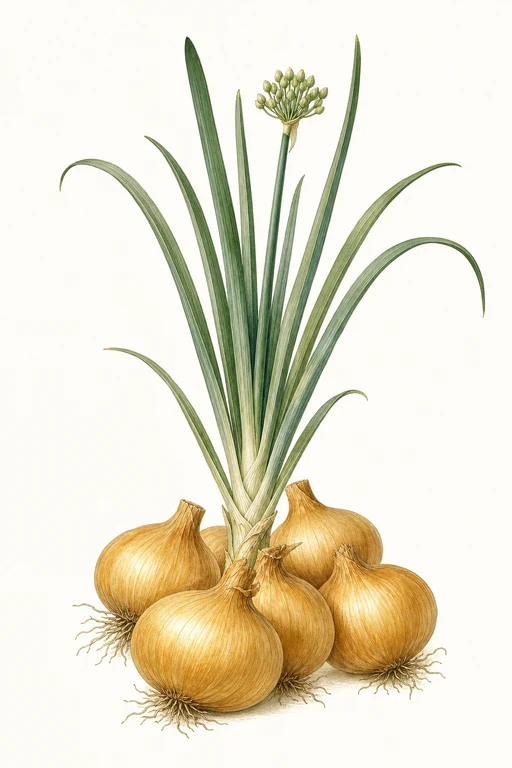
Golden globes with a firm, papery jacket—Patterson F1 brings a rich, sweet-onion aroma that deepens in storage.
At maturity, the bulbs form a classic flattened-to-round silhouette with a smooth, even skin and a dependable, uniform size for steady harvests. Ideal for long-term pantry keeping, Patterson F1 shines when you want reliable flavor that stays mellow and satisfying from season to season.
Light: Full SunMaturity: 110 DaysHabit: Bulbing
Crop Dates : 2b
| Milestone | Date |
|---|---|
| Last Frost | May 15th |
| Growing Approach | Protected Environment Only |
Crop Details
| Trait | Value |
|---|---|
| Days to Maturity | 110 |
| Sun Requirements | Full Sun |
| Growth Habit | Bulbing |
| Support Needed | None |
| Planting Depth | Normal |
| Germination Temp (°F) | 70 |
| Min Soil Temp (°F) | 45 |
| Min Night Temp (°F) | 35 |
| Harden Off (days) | 7 |
Culinary Notes

Chef's Note
Patterson F1 is built for the long game: its firm, well-jacketed bulbs keep that sweet-onion chemistry intact so you get the same mellow caramel flavor week after week. Use it for slow browning or jammy baking—its flesh turns glossy and sweet instead of going watery, which is where a lot of lesser storage onions betray you.

Best Uses
- slow-caramelized onion jam for burgers and sandwiches
- baked whole-onion halves that go jammy and sweet without collapsing
- French onion soup with a steady melt and even browning
- thin slicing for raw or quick-pickled applications where it stays crisp

Flavor Profile

Kitchen Pairings
Frequently Asked Questions
What pest or disease most commonly affects Allium cepa (onion) like Patterson F1, and how can I control it?
How often should I water Patterson F1 onions during the main bulb-building phase?
How do I know when Patterson F1 (Allium cepa) is ready to harvest?
Sowing Tips

Transplant Conditions
Wait until soil reaches 45°F and nights stay above 35°F before moving outdoors. Harden off for 7 days first.
Expert Note

For the best long-term storage bulbs, keep plants in full sun and avoid nitrogen overfeeding—thick necks cure poorly.