
Pepquino
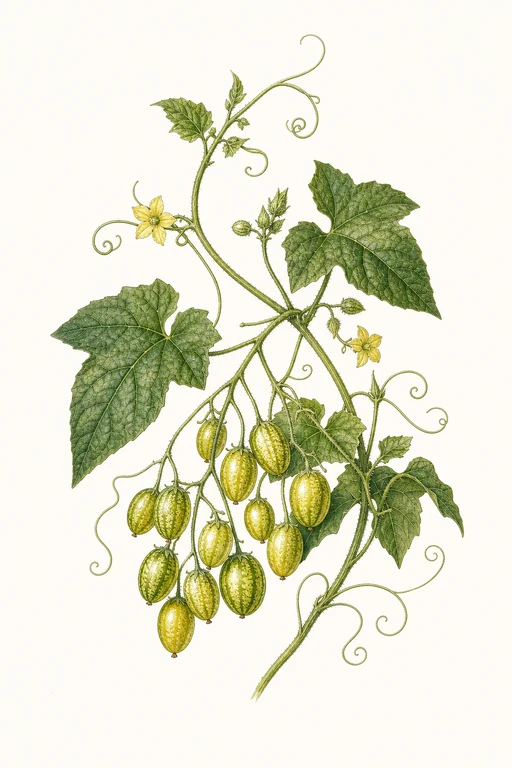
Aromatically bright and delightfully tangy, Pepquino cucamelons ripen to tiny, grape-sized fruits with a crisp, juicy snap and a refreshing sweet-tart bite.
Their warm chartreuse skins blush toward pale gold as they mature, offering a lively flavor that shines in fresh bowls, quick pickles, and vibrant salsas. Grow Pepquino for a playful vine that delivers abundant, snackable fruit from late summer into early fall—each one a miniature burst of garden brightness.
Light: Full SunMaturity: 80 DaysHabit: Vine
Planting schedules and alerts are optimized for Columbus (Zone 6b).
Crop Dates
| Milestone | Date |
|---|---|
| Start Indoors | Direct Sow |
| Last Frost | Apr 25th |
| Transplant / Sow Outdoors | Apr 25th |
| Harvest Begins | Jul 14th |
| Harvest Ends | Oct 16th |
Crop Details
| Trait | Value |
|---|---|
| Days to Maturity | 80 |
| Sun Requirements | Full Sun |
| Growth Habit | Vine |
| Support Needed | Trellis |
| Planting Depth | Normal |
| Germination Temp (°F) | 70 |
| Min Soil Temp (°F) | 65 |
| Min Night Temp (°F) | 55 |
| Harden Off (days) | 10 |
Culinary Notes

Chef's Note
Pepquino cucamelons are tiny but loud: they bite like a fresh grape with cucumbery snap and a sweet-tart snap that pops in minutes. They’re especially good when pickled or folded into salsa—heat and time are brief, so they keep their crispness instead of going watery.

Best Uses
- quick refrigerator pickles (best for keeping the snap)
- fresh snack bowls with flaky salt and citrus
- vibrant salsa/chutney where they stay chunky and juicy
- quick toss into herb-heavy salads without wilting

Flavor Profile

Frequently Asked Questions
What pest or disease most commonly affects Melothria scabra (cucamelon/pepquino), and how do I manage it?
How often should I water pepquino during the main growing phase (after it’s established)?
How can I tell when pepquino fruits are ready to harvest?
Sowing Tips

Transplant Conditions
Wait until soil reaches 65°F and nights stay above 55°F before moving outdoors. Harden off for 10 days first.

Direct Sow Preferred
Sensitive roots — does not transplant well. If starting indoors, use biodegradable pots and disturb roots as little as possible when moving outdoors.
Expert Note

Treat Pepquino like a true warm-season cucurbit—start only after nights are reliably warm and keep soil evenly moist for steady fruiting.