
Petch Siam
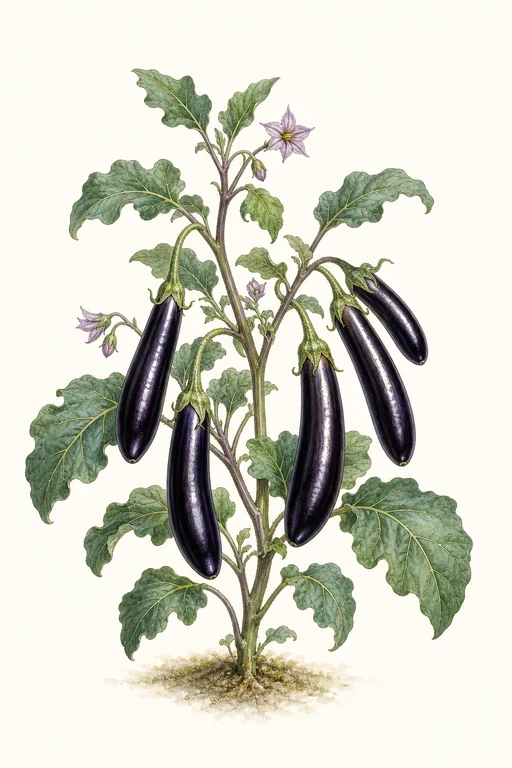
Petch Siam brings a glossy, midnight-purple elegance to the garden—sleek, slender fruits that feel satiny to the touch and hold their shape with a tender bite.
Their flavor is pleasantly mild with a gentle, savory depth, making them ideal for stir-fries and quick sautés, as well as vibrant curries and dipping sauces. Grow Petch Siam for a steady harvest of Thai-style eggplants that look as striking as they taste, from first bloom to the final pick at about 75 days.
Light: Full SunMaturity: 75 DaysHabit: Indeterminate
Planting schedules and alerts are optimized for Columbus (Zone 6b).
Crop Dates
| Milestone | Date |
|---|---|
| Start Indoors | Feb 28th |
| Last Frost | Apr 25th |
| Transplant / Sow Outdoors | Jun 20th |
| Harvest Begins | Sep 3rd |
| Harvest Ends | Oct 16th |
Crop Details
| Trait | Value |
|---|---|
| Days to Maturity | 75 |
| Sun Requirements | Full Sun |
| Growth Habit | Indeterminate |
| Support Needed | Stake |
| Planting Depth | Normal |
| Germination Temp (°F) | 80 |
| Min Soil Temp (°F) | 60 |
| Min Night Temp (°F) | 50 |
| Harden Off (days) | 10 |
Culinary Notes

Chef's Note
Petch Siam’s slender fruits cook fast and keep a tender, satiny bite, so they won’t melt into puree the way some larger eggplants can. Its mild, savory base is built for punchy Thai seasonings—high-heat stir-fry and late-add curries where the sauce clings instead of flooding.

Best Uses
- quick Thai-style stir-fries where the pieces hold their shape
- curry simmering—add late so they don’t collapse
- hot dipping sauces (nam prik–style) where the flesh soaks up chili-salt
- char-and-slice applications for smoky skin with creamy interior

Flavor Profile

Frequently Asked Questions
What pest or disease commonly hits Solanum melongena (eggplant) in home gardens, and how do I control it?
How often should I water Solanum melongena during the 60–75 day fruiting phase?
How can I tell when petch siam eggplant (Solanum melongena) is ready to harvest?
Sowing Tips

Transplant Conditions
Wait until soil reaches 60°F and nights stay above 50°F before moving outdoors. Harden off for 10 days first.
Expert Note

For Thai eggplants, start with a warm, steady germination (about 80°F) and transplant only once nights are reliably warm to prevent slow, stressed growth.