
Picasso
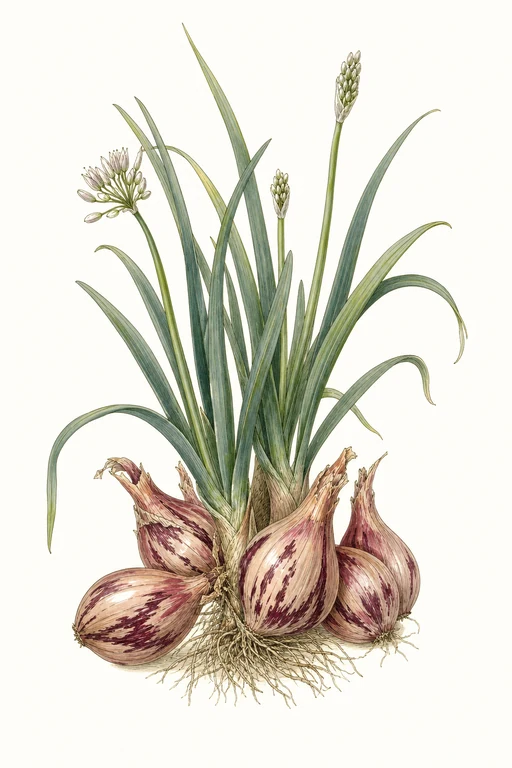
Aromatic and richly complex, Picasso shallots unfold with a sweet-onion fragrance and a gentle, lingering tang that feels both elegant and bold.
At maturity, the bulbs show striking, painterly skins—creamy white to blush with vivid burgundy-purple streaks—while the flesh stays crisp and tender, ideal for turning everyday dishes into something memorable. Grow Picasso for its heirloom character and dependable, cool-season performance, with bulbs that store well and shine in sauces, roasting, and pickling alike.
Light: Full SunMaturity: 90 DaysHabit: Bulbing
Planting schedules and alerts are optimized for Columbus (Zone 6b).
Crop Dates
| Milestone | Date |
|---|---|
| Start Indoors | Direct Sow |
| Last Frost | Apr 25th |
| Transplant / Sow Outdoors | Apr 25th |
| Harvest Begins | Jul 24th |
| Harvest Ends | Oct 16th |
Crop Details
| Trait | Value |
|---|---|
| Days to Maturity | 90 |
| Sun Requirements | Full Sun |
| Growth Habit | Bulbing |
| Support Needed | None |
| Planting Depth | Normal |
| Germination Temp (°F) | 75 |
| Min Soil Temp (°F) | 45 |
| Min Night Temp (°F) | 35 |
| Harden Off (days) | Not Required |
Culinary Notes

Chef's Note
Picasso shallots start fragrant and sweet, then turn tangy without getting harsh—so they’re money for reductions where the slices soften into a silky, spoonable texture. Their crisp-tender bite also holds up in pickles and roasts, staying bright instead of turning sulfurous.

Best Uses
- thin slicing for raw applications like quick-pickled shallot or salad garnish that stays crisp
- sautéing into a glossy base for pan sauces and beurre blanc—no need to overcook to get sweetness
- roasting until bronzed and jammy for spreadable topping on bread or steak
- quick pickling for sharp, clean acidity that cuts through rich proteins

Flavor Profile

Kitchen Pairings
Frequently Asked Questions
What’s the most common onion pest or disease problem for Allium cepa var. aggregatum (Picasso onion), and how can I prevent it?
How often should I water Picasso onions during the 60–90 day bulbing phase, and what soil moisture level should I aim for?
How do I tell when Picasso onions (Allium cepa var. aggregatum) are ready to harvest at around 90 days?
Sowing Tips

Transplant Conditions
Wait until soil reaches 45°F and nights stay above 35°F before moving outdoors.
Expert Note

For best shallot bulbing, plant in cool weather with consistent moisture, then stop heavy watering as bulbs start to size up.